dan-wright-101-doorway

Gynaecomastia surgery in London: What to expect at 101 Harley Street

  • Blogs
  • Body

Gynaecomastia surgery in London: What to expect

For a lot of men, gynaecomastia is one of those things they try to ignore for years before finally doing something about it.

Maybe it started during puberty and never fully went away. Maybe it appeared later in life after weight changes, medication use, or hormonal shifts. For others, it’s the frustration of getting leaner, training consistently, and still feeling like the chest never looks quite right in fitted clothing.

Whatever the cause, enlarged male breast tissue can have a genuine impact on confidence. Many men avoid certain t-shirts, feel uncomfortable at the gym, or become increasingly aware of chest projection and “puffy nipples” in situations where they’d rather not think about it at all.

At 101 Harley Street, gynaecomastia surgery is approached with discretion, precision, and a highly personalised treatment plan. For patients whose symptoms have not improved naturally or through lifestyle changes alone, surgery can offer a flatter, firmer, more masculine chest contour with long-lasting results.

What is gynaecomastia?

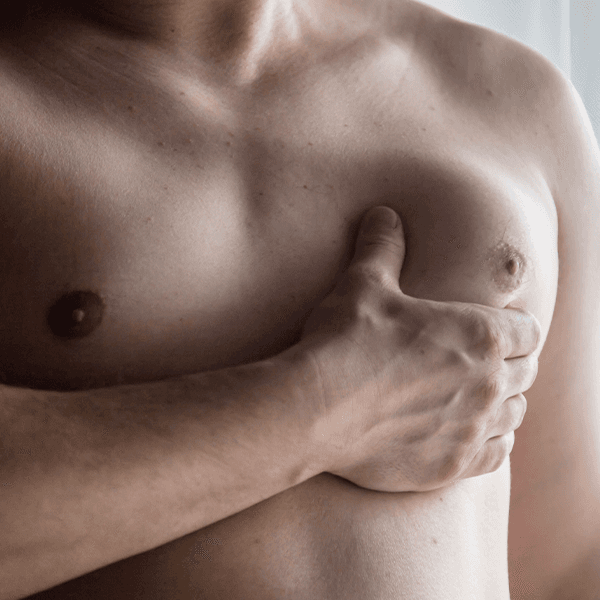
Gynaecomastia is a common condition that causes enlargement of male breast tissue. It can affect one side of the chest or both and varies significantly in severity from person to person.

Importantly, true gynaecomastia is not simply excess fat. The condition involves enlarged glandular breast tissue, often caused by hormonal imbalances between testosterone and oestrogen.

This is different from pseudogynaecomastia, which refers to fat deposits in the chest area without glandular enlargement. Some men experience a combination of both.

In everyday language, patients may describe the condition as:

  • “man boobs”
  • “gyno”
  • enlarged chest tissue
  • puffy nipples
  • excess chest fullness

While these phrases are commonly searched online, the emotional impact behind them is often more significant than people realise.

Many men feel embarrassed discussing the condition, even with close friends or partners. It can affect confidence in social situations, intimacy, holidays, exercise, and clothing choices. Some patients become highly self-conscious in changing rooms or avoid going shirtless altogether.

Although gynaecomastia itself is usually not medically dangerous, persistent cases that do not improve naturally can be difficult to address through diet and exercise alone, particularly when glandular tissue is involved.

This is where surgical treatment may be considered.

What causes gynaecomastia?

Gynaecomastia can develop for several different reasons, and in many cases, there is more than one contributing factor.

One of the most common causes is hormonal fluctuation. During puberty, temporary hormone imbalances can lead to enlarged breast tissue in teenage boys. For some, this settles naturally within months or years. For others, the tissue remains into adulthood.

Hormonal changes later in life can also contribute to gynaecomastia, particularly as testosterone levels decline with age.

Other potential causes include:

  • weight gain
  • certain prescription medications
  • anabolic steroid use
  • recreational drugs
  • excessive alcohol consumption
  • some underlying medical conditions

Even men who are fit and physically active can develop gynaecomastia. In fact, one of the most frustrating aspects of the condition is that chest fullness often remains despite weight loss or regular training.

While exercise may reduce surrounding fat, it cannot remove dense glandular tissue or significantly improve puffy nipple projection when true gynaecomastia is present.

Before recommending surgery, the team at 101 Harley Street will assess the likely cause of the condition and determine whether surgical treatment is appropriate.


Learn more about Gynaecomastia
101-harley-street-front-stonework-arch

Am you a candidate for gynaecomastia surgery?

Gynaecomastia surgery is generally best suited to men who:

  • have persistent chest enlargement that has not resolved naturally
  • are close to a stable, healthy weight
  • are in good general health
  • have realistic expectations about results
  • feel self-conscious or uncomfortable due to the appearance of their chest

Patients do not necessarily need to be extremely lean before surgery, but maintaining a stable BMI is important. Significant future weight fluctuations can affect long-term results.

Skin quality and elasticity also play a role in surgical planning. Younger patients often have firmer skin with better natural retraction, while some older patients may require additional contouring depending on the degree of loose skin present.

At 101 Harley Street, the consultation process is designed to be informative and discreet. During your appointment, your surgeon will assess:

  • the type of tissue present
  • skin quality
  • chest anatomy
  • nipple projection
  • overall body proportions
  • medical history and lifestyle factors

From there, a personalised treatment plan can be created based on your specific concerns and goals.

Patients are encouraged to discuss honestly what bothers them most, whether that is overall fullness, asymmetry, enlarged nipples, or chest definition in clothing.

male-chest-grip-flesh

What does gynaecomastia surgery involve?

Gynaecomastia surgery is not a one-size-fits-all procedure. The exact surgical approach depends on the type and severity of tissue present.

At 101 Harley Street, treatment may involve:

  • liposuction
  • gland excision
  • or a combination of both techniques

Liposuction

When excess fatty tissue is a significant component, liposuction may be used to contour and reduce chest fullness.

Small incisions are placed discreetly around the chest area, allowing the surgeon to remove excess fat and improve overall shape and definition.

In some cases of pseudogynaecomastia, liposuction alone may be sufficient.

Patients considering body contouring procedures may also explore related treatments such as liposuction for other areas of the body.

Gland excision

For patients with true gynaecomastia, glandular tissue often needs to be surgically removed.

This firmer tissue cannot usually be eliminated through exercise or liposuction alone. Excision is commonly performed through a discreet incision placed around the edge of the areola, helping minimise visible scarring.

This approach is often particularly effective for correcting:

  • dense glandular tissue
  • nipple projection
  • “puffy nipples”
  • asymmetry

Combination surgery

Many patients benefit from a combination approach using both liposuction and gland excision to achieve the smoothest, most natural contour possible.

The procedure is typically performed as day surgery and may be carried out under either local or general anaesthesia depending on the complexity of the case and patient preference.

Your surgeon will discuss the most appropriate option during consultation.

Recovery and downtime after gynaecomastia surgery

Recovery following gynaecomastia surgery is usually straightforward, although patients should still allow proper time for healing.

Immediately after surgery, some swelling, tightness, bruising, and mild discomfort are expected. These symptoms are temporary and generally improve steadily over the first few weeks.

Most patients will be advised to wear a compression garment following surgery. This helps:

  • reduce swelling
  • support healing tissues
  • encourage smoother contouring
  • improve comfort during recovery

The first week after gynaecomastia surgery

During the first few days, rest and reduced activity are important.

Many patients feel well enough to return to desk-based work within around one week, although this varies depending on the extent of surgery and individual healing.

Some swelling and unevenness are completely normal during this stage.

Weeks 2 to 4 after gynaecomastia surgery

By this point, bruising typically begins to settle and patients gradually return to more normal daily activities.

Light walking is encouraged early on, but strenuous exercise, chest training, and heavy lifting should still be avoided until cleared by your surgeon.

The chest will continue to soften and settle over time.

Full recovery after gynaecomastia surgery

While patients usually notice an early improvement in chest shape relatively quickly, final results take longer to fully develop.

Residual swelling can persist for several months, particularly after more extensive gland excision.

Most final results become visible between three and six months after surgery.

101-doorway-arch
dan-stethoscope

Gynaecomastia surgery results: what to expect

For many patients, the biggest benefit of gynaecomastia surgery is not simply physical, but psychological.

Feeling more comfortable in fitted clothing, at the gym, or on holiday can make a significant difference to confidence and day-to-day quality of life.

Results aim to create:

  • a flatter chest contour
  • improved chest definition
  • reduced nipple projection
  • a more masculine chest appearance

Patients with puffy nipples often notice a particularly significant improvement after glandular tissue removal.

Scarring is an understandable concern, but modern surgical techniques aim to keep incisions as discreet as possible. In many cases, scars fade substantially over time and become difficult to notice once fully healed.

It is also important to understand that results continue evolving during recovery. Swelling, firmness, and minor irregularities early on are a normal part of the healing process.

Provided a stable weight and healthy lifestyle are maintained, gynaecomastia surgery results are generally long-lasting. However, significant hormonal changes, weight gain, or steroid use can contribute to recurrence in some cases.

Speak with a specialist

Gynaecomastia Surgery Frequently Asked Questions

How much does gynaecomastia surgery cost?

The cost of gynaecomastia surgery varies depending on the complexity of the procedure, the surgical approach required, and whether liposuction, gland excision, or both are needed.

A personalised quotation is typically provided following consultation at 101 Harley Street.

Will gynaecomastia come back after surgery?

Results are usually permanent when glandular tissue has been properly removed.

However, future hormonal changes, significant weight gain, anabolic steroid use, or certain medications may contribute to recurrence in some patients.

Can you treat puffy nipples without surgery?

If puffy nipples are caused by true glandular gynaecomastia, non-surgical treatments are often limited.

Exercise and weight loss may improve surrounding fat, but they cannot usually remove dense glandular tissue beneath the nipple area.

A consultation can determine whether surgery is likely to be the most effective option.

How long does gynaecomastia surgery take?

Most procedures take approximately one to three hours depending on the complexity of the surgery and whether multiple techniques are being combined.

The majority of patients return home the same day.

Does gynaecomastia surgery leave scars?

All surgery leaves some degree of scarring, but incisions are usually placed carefully in discreet areas around the areola or chest folds wherever possible.

Scars typically continue fading over several months.

Book your gynaecomastia surgery consultation at 101 Harley Street

If enlarged chest tissue or puffy nipples are affecting your confidence, a consultation with our friendly team of medical experts at 101 Harley Street can help clarify the cause of the condition and the treatment options available.

The experienced surgical team at 101 Harley Street offers discreet, personalised assessment and treatment plans tailored to each patient’s anatomy and goals.

Send a message

Follow us on Instagram

At 101 Harley Street, our day surgery provides the best all-female team for labiaplasty procedures led by Dr Nicki Bystrzonowski, who ensures a comfortable and private experience throughout ✨

If you’ve ever wondered whether this procedure would be right for you, read the FAQs around labiaplasties at 101 Harley Street, and follow the link in our bio for more information. 

Get in touch with our amazing team to book a consultation! 

#harleystreet #labiaplasty #daysurgery #faq #101harleystreet✨✨✨A quiet moment at 101 Harley Street ✨

Where calm meets care, and every detail is designed with you in mind. Peaceful spaces, elevated experience. 🤍

#101HarleyStreet #HarleyStreet #DaySurgeryBehind the scenes ✨

Today, Dr Nicki Bystrzonowski is performing a labiaplasty with precision, care, and an all female team. Every procedure prioritises both comfort and confidence in a safe, clinical environment. 

Yesterday (April 21st) marked National Vulva Day! An important reminder to support education, reduce stigma, and empower individuals to make informed choices about their bodies. 

#101HarleyStreet #Labiaplasty #NationalVulvaDay #PatientCare #HarleyStreetA quiet moment of preparation before the work begins. ✨

#101HarleyStreet #DaySurgery #CosmeticSurgery #HarleyStreet #Theatre✨✨✨Precision in action 👁️✨

Mr Gino Vissers performing an upper blepharoplasty this morning at 101 Harley Street. Focused on subtle, natural results. @dr.ginovissers 

#Blepharoplasty #101HarleyStreet #AestheticSurgery #HarleyStreet

How can you find us?

Our surgery is located on Harley Street in Marylebone, London, within one of the world’s most prestigious and historic medical districts. Situated at 101 Harley Street, the clinic offers a discreet and refined setting in the heart of Central London, bringing together leading consultants, advanced facilities and personalised care.

We welcome patients from across the world, as well as patients travelling to London from across the UK and internationally for specialist medical, surgical and aesthetic treatments.

Our location benefits from excellent transport connections. Regent’s Park, Oxford Circus and Baker Street Underground stations are all within easy walking distance, while major London rail stations and international airports  including Heathrow, Gatwick and London City provide convenient access for national and international visitors.

Whether you are travelling from within London or further afield, our Harley Street clinic provides a calm, professional environment designed to deliver exceptional care in one of the capital’s most respected medical locations.


Opening hours
Monday
9 am–5 pm
Tuesday
9 am–5 pm
Wednesday
9 am–5 pm
Thursday
9 am–5 pm
Friday
9 am–5 pm
Saturday
9 am–5 pm
Sunday
Closed
101 Harley Street Day Surgery
101 Harley St, London W1G 6AH
Get directions
Speak to a specialist
Whatsapp
Gynaecomastia Surgery in London: What to Expect at 101 Harley Street