

Fat Transfer Under the Eyes: Can Fat Grafting Treat Tear Troughs and Hollowing?

  • Blogs
Hero gallery image 1

Authored and reviewed by Dr Duncan Brennand, Lead Aesthetic Doctor 

23rd Sep 2026 | 101 Harley Street

Yes, in selected patients, fat transfer can restore volume beneath the eyes and soften tear troughs and lower eyelid hollowing. The procedure uses a small amount of your own fat, harvested from another area of the body and carefully grafted where support has been lost. However, not every dark circle or eye bag is caused by volume loss. Pigmentation, thin skin, protruding lower eyelid fat and skin laxity can look similar in photographs but need different treatment. At 101 Harley Street, a consultant-led surgical assessment comes first, so you can understand whether under-eye fat grafting, filler, blepharoplasty or another approach is the most appropriate option for your anatomy.

What Causes Under-Eye Hollows and Tear Troughs?

Under-eye hollows and tear troughs are usually caused by natural anatomy, age-related volume loss or reduced support from the cheek and midface.

Tear troughs are grooves that run from the inner corner of the eye towards the upper cheek. Some people have a pronounced tear trough from a young age because of their bone structure or deep-set eyes. In others, the hollow becomes more noticeable with age, as facial fat compartments change, the cheek loses projection and the lower eyelid-cheek junction becomes less smooth. Thin skin can make the resulting shadow look darker.

Pigmentation, visible blood vessels, fluid retention, prominent eye bags and loose lower eyelid skin can also create a tired appearance. These are separate problems, and adding volume will not correct them, which is why diagnosis matters as much as treatment.

How Does Fat Transfer Under the Eyes Work?

Under-eye fat transfer works by moving a small amount of your own fat from a donor area into the hollow beneath the eyes.

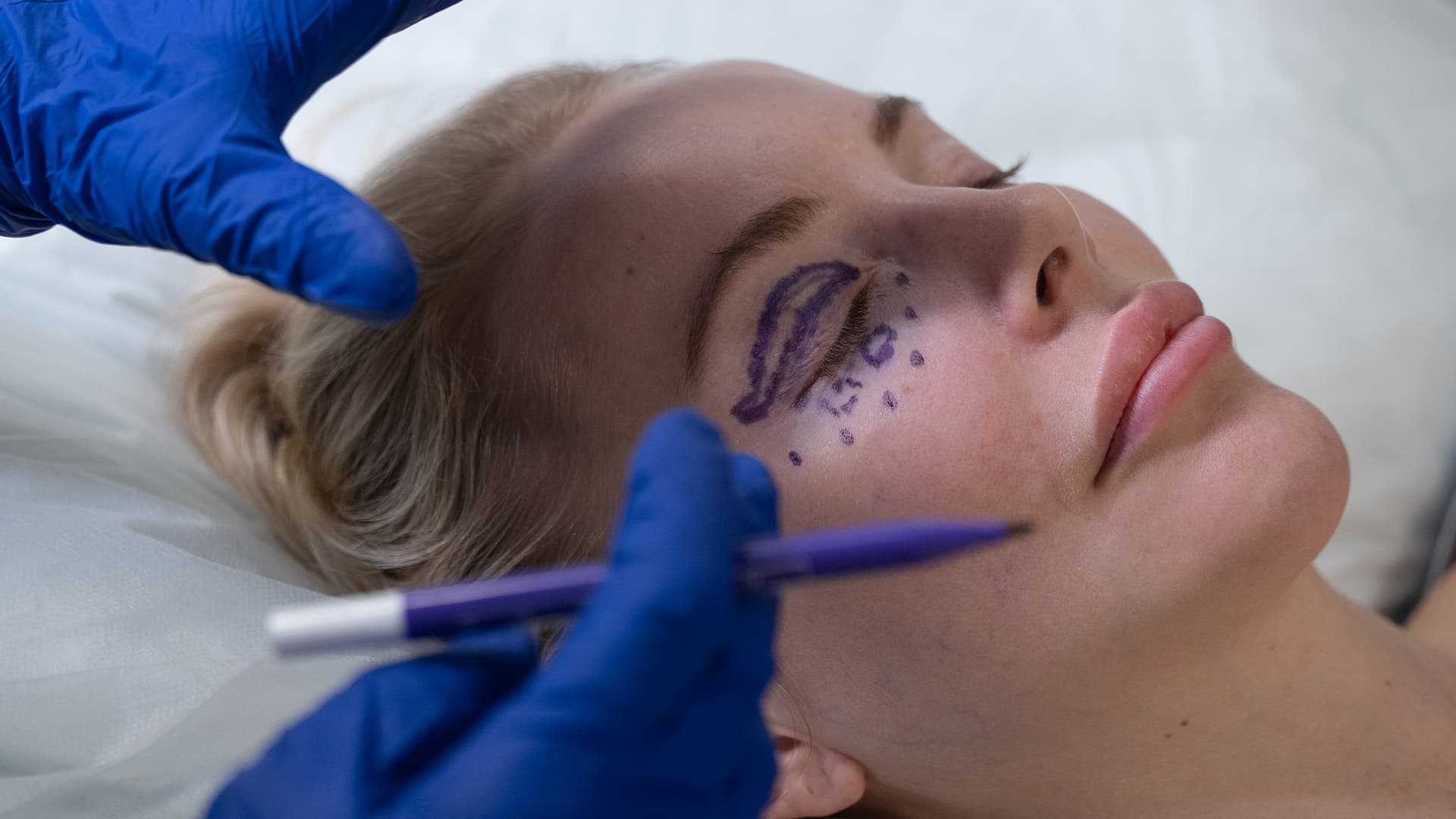
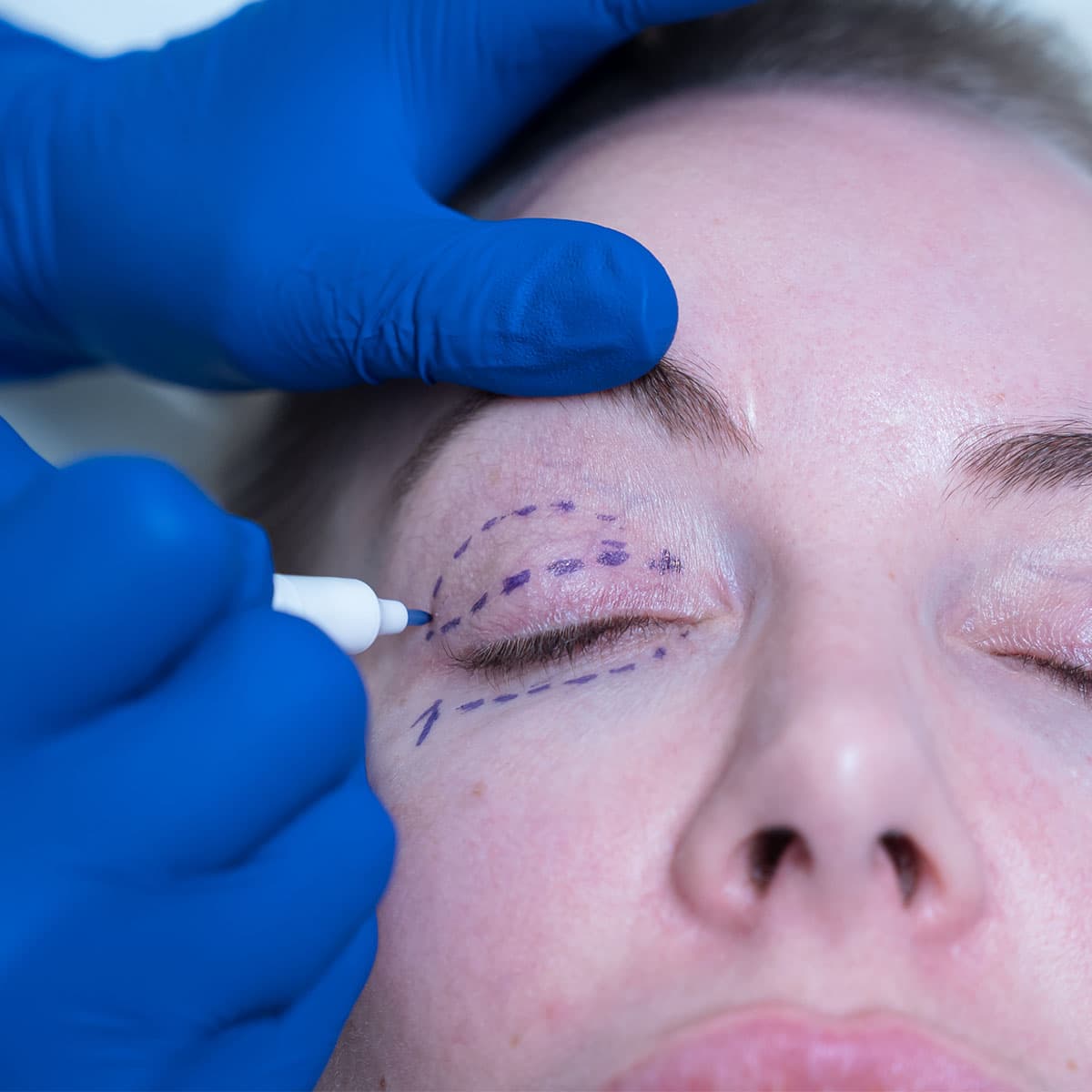
A small volume of fat is removed from a suitable area using liposuction, prepared, and then placed in tiny amounts into carefully selected planes of the tear trough, lower eyelid-cheek junction or upper cheek. The aim is to replace missing volume and create a smoother transition between the eyelid and midface.

This is a surgical fat-grafting procedure, even though the access points are very small. Because the area around the eyes is delicate and contains important blood vessels, precise assessment, conservative volume placement and detailed anatomical knowledge are essential. Depending on the extent of treatment, fat transfer at 101 Harley Street may be performed under local anaesthetic with sedation or under general anaesthetic.

Who May Be Suitable for Under-Eye Fat Grafting?

You may be suitable for under-eye fat grafting if genuine volume loss is a major part of your concern and you have enough donor fat and realistic expectations.

  • a visible tear trough or hollow at the lower eyelid-cheek junction
  • age-related volume loss through the upper cheek or midface
  • a preference for using your own tissue rather than filler
  • sufficient donor fat for harvesting
  • stable weight and good general health
  • an understanding that some transferred fat is naturally reabsorbed

Suitability is not defined by age alone. Your lower eyelid support, cheek volume, skin quality and overall facial anatomy matter more than a particular age.

What Can Fat Transfer Improve Under the Eyes?

Fat transfer is most useful for hollowing caused by volume loss, rather than every concern that appears as a dark circle or eye bag.

Concern How fat transfer may fit
Tear trough hollowing May restore volume and soften the groove in selected patients
Lower eyelid-cheek hollow May smooth the transition where volume loss is the main cause
Midface volume loss Can sometimes be treated as part of broader facial fat grafting
Prominent eye bags Usually needs assessment for lower blepharoplasty rather than volume alone
Pigmentation or vascular dark circles Fat transfer does not remove pigment or visible vessels
Significant skin laxity May need a different or combined treatment plan

A good consultation therefore asks why the area looks hollow or dark before deciding how to treat it.

Fat Transfer vs Tear Trough Filler

Both fat transfer and tear trough filler can restore volume under the eyes, but one is a surgical procedure using your own tissue and the other is a non-surgical injectable.

Tear trough filler can offer a smaller, targeted correction with a shorter initial recovery. Fat transfer involves a donor site and a surgical procedure, and may be considered when volume loss is broader, when fat grafting is already part of another facial procedure, or when you prefer to use your own tissue after discussing the options with a surgeon.

Neither option is right for everyone. Some grafted fat is naturally reabsorbed, so the retained volume varies. Filler is not suitable for every tear trough either, particularly where there is puffiness or a tendency to fluid retention.

Fat Transfer vs Lower Blepharoplasty

Lower blepharoplasty is usually more relevant when the main concern is a protruding eye bag, excess skin or lower eyelid laxity, while fat grafting addresses missing volume.

If your concern is a hollow, grafting may be appropriate. If it is a bag caused by bulging fat or loose tissue, lower blepharoplasty may give a more direct correction, sometimes with existing fat repositioned into the groove beneath. Adding fat to a true eye bag can make the area look heavier, while removing fat from an already hollow face can worsen volume loss. Your surgeon needs to identify which problem is present before recommending treatment.

face-measurement

What Are the Risks and Limitations of Under-Eye Fat Transfer?

Fat grafting around the eyes can restore volume, but it carries risks and limitations and should be approached conservatively.

  • swelling and bruising around the eyes and at the donor site
  • temporary asymmetry while swelling settles
  • uneven fat survival, leading to under-correction or asymmetry
  • contour irregularity, lumpiness or visible fullness
  • over-correction or the need for further adjustment
  • fat necrosis, small nodules or oil cysts
  • infection or delayed healing
  • the possibility that more than one grafting session is needed

Facial fat grafting also carries rare but serious vascular risks if grafted material enters a blood vessel. These complications are uncommon, but they matter, and your surgeon will discuss them as part of informed consent.

surgery-team

What Is Recovery Like After Fat Transfer Under the Eyes?

Many patients take around one week away from work after fat transfer and return towards normal activities over the following two to three weeks, although recovery varies.

Swelling and bruising around the eyes can be particularly visible in the first days, and subtle swelling may take longer to settle, especially if fat grafting is combined with other surgery. The donor area may also feel bruised and tender. The early appearance is not the final result: some grafted fat is reabsorbed during healing, and the retained volume becomes clearer over the following months.

What Should Be Assessed at Consultation?

Your consultation should start by identifying the cause of your under-eye concern, rather than choosing a treatment in advance.

  • whether the main problem is hollowing, eye bags, pigmentation, skin laxity or a combination
  • lower eyelid support and position
  • cheek and midface volume
  • skin thickness and quality
  • previous tear trough filler or facial surgery
  • available donor fat and weight stability
  • your medical history and any factors that may affect healing

If you already have filler in the area, tell your surgeon which product was used, when it was injected and whether it has been dissolved.

surgery-prep-harley-street

Fat Transfer at 101 Harley Street

At 101 Harley Street, fat transfer is planned as a surgical procedure, with the donor and recipient areas assessed together.

Our main fat transfer page covers harvesting, preparation, anaesthesia and the wider range of areas treated. For tear troughs or under-eye hollowing, your consultation will establish whether fat grafting is suitable, or whether blepharoplasty, a non-surgical option or a combined approach would suit you better. You can also read about your surgical journey with us.

Book a consultation

Frequently Asked Questions

Can fat transfer get rid of tear troughs?

Fat transfer can improve tear troughs when the groove is mainly caused by a lack of volume at the lower eyelid-cheek junction. Small amounts of your own fat are grafted into selected areas to soften the hollow. It will not correct every dark circle or eye bag, so your surgeon first needs to establish whether volume loss is the main cause. Where it is, the improvement can be natural-looking and long-lasting.

Is under-eye fat transfer permanent?

Fat transfer can provide long-lasting volume once the grafted fat establishes a blood supply, but not all transferred fat survives. Some is naturally reabsorbed during healing, and the amount retained varies between patients. The surviving fat then behaves like other fat in the body and can change with weight and ageing. For this reason, the result is best described as long-lasting rather than permanent. Your surgeon will explain what to expect for you.

Is fat transfer better than tear trough filler?

Neither treatment is better for everyone. Filler is non-surgical and may suit small, targeted volume loss, while fat transfer is a surgical option using your own tissue and may suit broader volume loss or patients already having facial surgery. The right choice depends on your anatomy, skin, any tendency to puffiness, previous treatments and the amount of correction needed, all of which your surgeon will carefully assess at your consultation.

Can fat transfer make eye bags worse?

It can, if volume is added to the wrong problem. A prominent eye bag may be caused by protruding lower eyelid fat or lax tissue rather than a hollow, and adding more volume without addressing that anatomy can make the area look heavier. If you have prominent bags, you may need assessment for lower blepharoplasty, fat repositioning or another surgical approach instead of, or alongside, fat grafting. This is why diagnosis comes first.

How is fat collected for under-eye fat transfer?

A small amount of fat is harvested from a suitable donor area, such as the abdomen or thighs, using liposuction. The fat is then prepared before being placed in small amounts around the lower eyelid, tear trough or upper cheek. The donor area depends on your anatomy and the amount of fat required. Your surgeon will discuss the planned donor site, and what to expect there during recovery, at your consultation.

How much downtime is there after under-eye fat transfer?

Downtime varies, but swelling and bruising are expected in the early recovery period. Many patients take around one week away from work after fat transfer and return to normal activities over two to three weeks. Under-eye swelling may remain visible for longer, particularly if the procedure is combined with other facial surgery. Your surgeon will give you personal guidance based on the extent of treatment and how your body heals.

Can under-eye fat transfer be combined with blepharoplasty?

Yes, in selected patients. Blepharoplasty can address lower eyelid bags, excess skin or structural changes, while fat grafting can restore volume where hollowing is also present. Combining techniques can be useful when more than one anatomical problem contributes to a tired appearance. Your surgeon will decide whether a combined procedure is appropriate for your lower eyelid and midface anatomy, and explain how it may affect your recovery timeline and results.

What are the risks of fat transfer around the eyes?

Risks include swelling, bruising, asymmetry, uneven fat survival, contour irregularity, over- or under-correction, fat necrosis, small lumps, infection and the possibility of further treatment. Facial fat grafting also carries rare but serious vascular risks. A detailed consultation and informed consent discussion are essential, because the under-eye area has complex anatomy and requires precise technique. Your surgeon will explain how each risk applies to you and how it is minimised in your treatment plan.

Book a consultation

Fat transfer can be a valuable option for under-eye hollowing caused by volume loss, but it is not the answer to every dark circle or eye bag. Understanding the cause of your concern is the first step. Book a consultation or speak to the team to discuss whether fat grafting, blepharoplasty or another approach may suit you.

Book a consultation

How can you find us?

Our surgery is located on Harley Street in Marylebone, London, within one of the world’s most prestigious and historic medical districts. Situated at 101 Harley Street, the clinic offers a discreet and refined setting in the heart of Central London, bringing together leading consultants, advanced facilities and personalised care.

We welcome patients from across the world, as well as patients travelling to London from across the UK and internationally for specialist medical, surgical and aesthetic treatments.

Our location benefits from excellent transport connections. Regent’s Park, Oxford Circus and Baker Street Underground stations are all within easy walking distance, while major London rail stations and international airports  including Heathrow, Gatwick and London City provide convenient access for national and international visitors.

Whether you are travelling from within London or further afield, our Harley Street clinic provides a calm, professional environment designed to deliver exceptional care in one of the capital’s most respected medical locations.

 

Opening hours
Monday
9 am–5 pm
Tuesday
9 am–5 pm
Wednesday
9 am–5 pm
Thursday
9 am–5 pm
Friday
9 am–5 pm
Saturday
9 am–5 pm
Sunday
Closed
101 Harley Street Day Surgery
101 Harley St, London W1G 6AH
Get directions
Speak to a specialist
Whatsapp