




chin-augmentation

Breast Asymmetry: When Can Surgery Correct Uneven Breasts?

  • Blogs
chin-augmentation

Authored and reviewed by Dr Duncan Brennand, Lead Aesthetic Doctor

12th Sep 2026 | 101 Harley Street

Some degree of breast asymmetry is common, and small differences in size, shape or nipple position are usually a normal part of anatomy. Surgery may be considered when a persistent difference in volume, shape, position or droop is noticeable enough to affect how clothing fits or how you feel about your body. The right operation depends on what is causing the difference: one breast may need more volume, another may need reducing, and a difference in position may be better treated with a lift. Surgery can improve balance and proportion, but it cannot create two identical breasts. At 101 Harley Street, a consultant-led assessment identifies the cause of your asymmetry first, so that any plan works with your natural anatomy.

Is Breast Asymmetry Normal?

Yes, some degree of breast asymmetry is normal, and many people have small differences in size, shape, nipple position or the height of the breast crease.

These differences often develop during puberty and may remain stable for years. They can become more noticeable after pregnancy, breastfeeding, weight change or ageing, when the two breasts do not always respond in the same way.

A cosmetic consultation is appropriate when the difference is long-standing and you would like to know whether it can be improved. A new or rapidly changing asymmetry should not be assumed to be cosmetic, however. A new lump, skin change, nipple change, persistent pain or any other new breast symptom should be assessed by your GP or a breast specialist before aesthetic surgery is considered.

What Causes Uneven Breasts?

Uneven breasts can be caused by natural development, pregnancy, weight change, ageing, chest wall differences or previous surgery, and the cause shapes the treatment.

  • Natural development and genetics: one breast may develop with more glandular tissue, a wider base or a different nipple position. These differences are often present from puberty.
  • Pregnancy and breastfeeding: pregnancy and breastfeeding change breast volume, skin elasticity and nipple position, and one breast may lose more volume or develop more droop than the other.
  • Weight change and ageing: weight change alters the fatty tissue in the breasts, while ageing affects skin elasticity and breast position. Both can reveal or exaggerate a previously subtle difference.
  • Chest wall and developmental differences: sometimes the ribs, chest wall, breast crease or underlying muscles differ between sides. Breast surgery can improve proportion, but it cannot always correct the underlying chest wall.
  • Previous surgery or trauma: previous breast surgery, scarring, trauma or reconstruction can alter volume, contour or position, and usually needs a more individualised plan.

What Type of Breast Asymmetry Do You Have?

The type of asymmetry you have depends on which features of the breasts differ, not simply which breast looks larger.

Type of asymmetry What may differ Surgical approach that may be assessed
Volume One breast has more or less volume than the other Augmentation, reduction or fat transfer
Position One breast sits lower on the chest Mastopexy, sometimes combined with another procedure
Shape Breast width, projection or contour differs Depends on the tissue and chest anatomy
Nipple or areola Nipple height or areola size differs Mastopexy, reduction or targeted repositioning
Combined Volume, shape and position all differ A tailored combination of procedures

This is why two patients who both describe having uneven breasts may be offered very different operations.

When Can Surgery Help Breast Asymmetry?

Surgery can help when the asymmetry is structural, persistent and significant to you, and when your goal is improved balance rather than exact symmetry.

At consultation, your surgeon will consider whether the best result is likely to come from adding volume, removing volume, lifting tissue or combining techniques. Augmentation, reduction, mastopexy and fat transfer are different tools for different problems, not interchangeable solutions.

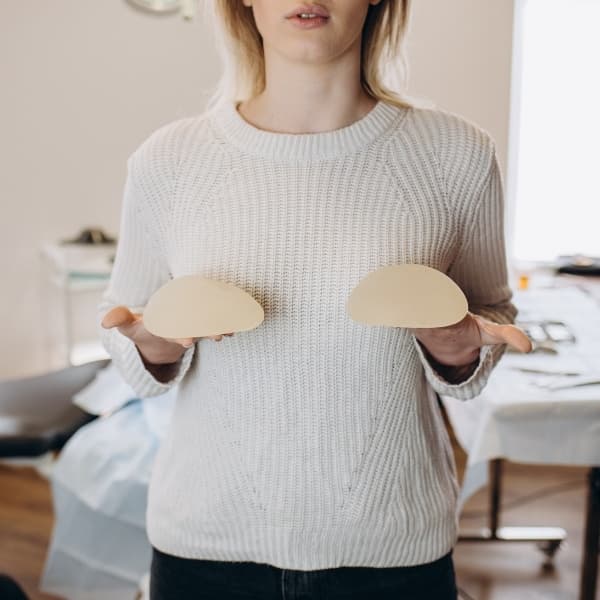
  • Breast Augmentation for Asymmetry: Breast augmentation may be considered when one breast is smaller or has less projection. Where clinically appropriate, your surgeon may use implants of different sizes or profiles to account for the starting difference, chosen according to breast width, tissue thickness and chest anatomy rather than cup size alone. If one breast also sits lower, augmentation alone may not fully correct the difference, and a lift may be discussed.
  • Breast Reduction for Asymmetry: Breast reduction may suit you if one breast is noticeably larger or heavier. The larger side can be reduced and reshaped to bring it closer to the other, and the nipple can be repositioned at the same time. In some patients, both breasts are reduced by different amounts to improve proportion and comfort.
  • Breast Lift for Asymmetry: A breast lift, or mastopexy, is used when the difference is mainly one of position or droop. If one nipple sits lower or one breast has a looser skin envelope, your surgeon may lift and reshape that side. Mastopexy can be performed alone, or with augmentation or reduction where the breasts also differ in volume.
  • Fat Transfer for Asymmetry: Fat transfer can help where a smaller, targeted volume adjustment is needed. Fat is collected from another area using liposuction, prepared and grafted into the breast. It can suit modest differences in volume or contour, but the amount that can be added is limited, and as not all transferred fat survives, a further session is sometimes needed.

Do Both Breasts Need Surgery?

Not always: some patients need surgery on only one breast, while others achieve better balance when both breasts are treated in different ways.

A smaller breast may be augmented while the other is lifted or reduced, or both breasts may receive implants of different sizes. Planning each side according to its own anatomy often gives your surgeon more control than performing an identical procedure on both.

How Does a Surgeon Plan Breast Asymmetry Correction?

Your surgeon plans breast asymmetry correction by examining and measuring both breasts and the chest wall in detail.

This usually includes:

  • breast volume and base width on each side
  • the position of the breast crease
  • nipple and areola height, size and direction
  • skin quality and degree of droop
  • chest wall shape and any previous scars or surgery
  • your preferred breast size, shape and proportion

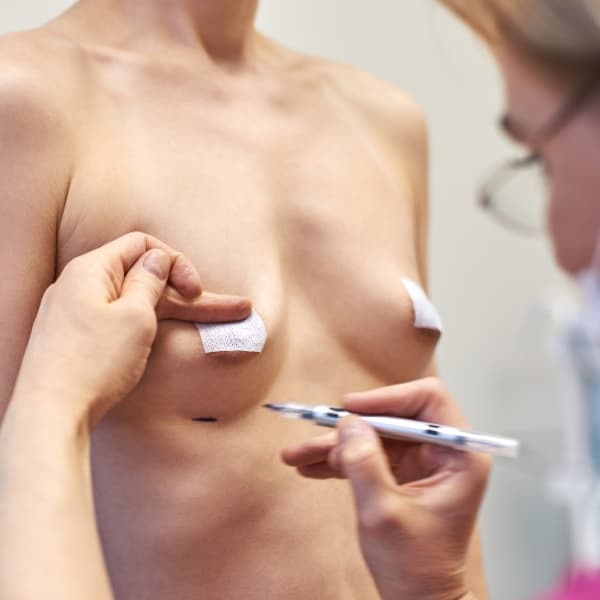
Photographs and surgical markings help document the starting difference. Your consultation will also cover scars, recovery, future pregnancy or weight change, and how much residual difference is realistic.

surgery-team-square

What Results Are Realistic?

The realistic aim of breast asymmetry surgery is improved balance and proportion, not two identical breasts.

Natural differences in the ribs, breast footprint, skin elasticity and healing can remain visible after surgery. Swelling may also settle at different rates on each side, so early asymmetry during recovery does not necessarily reflect the final result. Your surgeon will explain what can be improved and which differences may remain.

When Might Surgery Not Be the Right Next Step?

Surgery may not be the right next step if the asymmetry is mild, your breast shape is still changing, or a new breast change needs medical assessment first.

  • The asymmetry is mild and does not cause you a practical or personal concern.
  • Your weight is changing significantly and your breast shape is not yet stable.
  • You are planning a pregnancy soon and would prefer to reassess afterwards.
  • The difference is new or comes with another breast symptom that needs medical assessment.
  • You are hoping for exact or permanent symmetry rather than a meaningful improvement in balance.

Breast Asymmetry Consultation at 101 Harley Street

A breast asymmetry consultation at 101 Harley Street focuses on identifying the cause of the difference before recommending a procedure.

Because the clinic offers breast augmentation, breast reduction, mastopexy and fat transfer, your consultant can compare more than one approach in the same consultation, rather than fitting every asymmetry into a single operation. They will examine both breasts, discuss the changes you would like and explain the likely scars, recovery and limitations of each option. You can read more about your surgical journey with us, from first consultation to aftercare.

Book now

Frequently Asked Questions

Can breast asymmetry be corrected with surgery?

Surgery can often improve breast asymmetry when the difference relates to volume, shape, nipple position or droop. The exact procedure depends on the cause. A smaller breast may be augmented, a larger breast may be reduced, a lower breast may need a lift, and small volume differences may sometimes be refined with fat transfer. Some patients need a combination of techniques. The aim is improved balance rather than two identical breasts.

Is it normal for one breast to be bigger than the other?

Yes. A degree of difference between the breasts is common and may involve size, shape, nipple position or the height of the breast crease. If the asymmetry has been stable for years, it often simply reflects your natural anatomy. A new or rapidly changing difference should be medically assessed by your GP or a breast specialist, particularly if it comes with a lump, skin change, nipple change or another new symptom, before any cosmetic treatment is considered.

Can one breast have a different implant size from the other?

In selected patients, implants of different sizes or profiles may be used to compensate for a pre-existing volume difference. Implant selection is based on breast width, existing tissue, chest anatomy and the result you would like. Using different implants will not make the breasts identical, and sometimes a lift, reduction or another technique is also needed to address differences in position or skin. Your surgeon will explain the options at consultation.

Can a breast lift correct asymmetry?

A breast lift can improve asymmetry when one breast sits lower, has more loose skin or has a lower nipple position. Mastopexy reshapes the breast and repositions the nipple rather than adding volume. If the breasts also differ in size, the lift may be combined with augmentation, reduction or fat transfer. Your surgeon will assess the position, skin and volume of each breast before recommending the most suitable combination for you.

Can breast reduction correct one breast being larger?

Yes. If one breast is significantly larger, reduction surgery can remove tissue and skin from the larger side and reshape it to improve balance. The nipple can usually be repositioned at the same time. In some patients, both breasts are reduced but by different amounts. Your surgeon will assess breast volume, any symptoms such as discomfort, nipple position and the overall size you would like before recommending a plan that suits your anatomy.

Can fat transfer help uneven breasts?

Fat transfer may help with smaller differences in breast volume or contour. Fat is harvested from another part of the body, processed and grafted into the area that needs more volume. It offers a subtle adjustment using your own tissue, but the amount that can be safely added is limited and some transferred fat is naturally reabsorbed. More than one session may sometimes be required to reach the planned result.

Do both breasts need surgery for asymmetry?

Not necessarily. Some patients need treatment on only one side, while others achieve better balance when both breasts are adjusted. For example, one breast may be augmented while the other is lifted or reduced, or both may receive implants of different sizes. The plan is based on the anatomy of each breast and the overall result you would like, rather than a rule that both sides must have the same operation.

Can surgery make breasts perfectly symmetrical?

No. Surgery cannot make two breasts exactly identical. Natural differences in the chest wall, breast footprint, skin quality and healing all influence the final result. The aim is to reduce the most noticeable differences and create a more balanced, proportionate appearance. Your consultant will explain what is realistically correctable for you and which small differences may remain after surgery, so you can decide whether the likely improvement meets your goals.

Book a consultation

Breast asymmetry is common, and surgery is one option rather than a necessity. Where a difference is persistent and matters to you, the right procedure depends on whether volume, position, shape or a combination is involved. A consultant-led assessment is the best place to start, so book a consultation or speak to the team to discuss your options.

Book a consultation

How can you find us?

Our surgery is located on Harley Street in Marylebone, London, within one of the world’s most prestigious and historic medical districts. Situated at 101 Harley Street, the clinic offers a discreet and refined setting in the heart of Central London, bringing together leading consultants, advanced facilities and personalised care.

We welcome patients from across the world, as well as patients travelling to London from across the UK and internationally for specialist medical, surgical and aesthetic treatments.

Our location benefits from excellent transport connections. Regent’s Park, Oxford Circus and Baker Street Underground stations are all within easy walking distance, while major London rail stations and international airports  including Heathrow, Gatwick and London City provide convenient access for national and international visitors.

Whether you are travelling from within London or further afield, our Harley Street clinic provides a calm, professional environment designed to deliver exceptional care in one of the capital’s most respected medical locations.

 

Opening hours
Monday
9 am–5 pm
Tuesday
9 am–5 pm
Wednesday
9 am–5 pm
Thursday
9 am–5 pm
Friday
9 am–5 pm
Saturday
9 am–5 pm
Sunday
Closed
101 Harley Street Day Surgery
101 Harley St, London W1G 6AH
Get directions
Speak to a specialist
Whatsapp