







VASER Liposuction Scars: What Do They Look Like and How Do They Heal?

  • Blogs
  • Body

Authored and reviewed by Dr Duncan Brennand, Lead Aesthetic Doctor 

28 Sep 2026 | 101 Harley Street

VASER liposuction leaves scars because the procedure requires small incisions to allow the cannula to pass beneath the skin. However, these access points are small and their position is planned carefully to make the resulting scars as discreet as possible.

How visible your scars eventually become depends on several factors, including their location, your skin and natural healing response, and how the incisions are cared for after surgery.

Here, we explain where VASER incisions may be placed, how scars change during healing and what you can do to look after them.

Book an Appointment

Does VASER liposuction leave scars?

Yes. Like other forms of liposuction, VASER requires small incisions in the skin.

VASER is a form of ultrasound-assisted liposuction. During the procedure, your surgeon uses these access points to pass the instruments needed for treatment, including a cannula used during fat removal.

The exact number, size and position of the incisions will depend on the area being treated, your anatomy and the surgical plan.

Although every incision has the potential to leave a permanent mark, this does not mean VASER scars will always remain obvious. Scars change considerably during the healing process and often become less noticeable as they mature.

Your surgeon will also consider incision placement when planning your procedure, with the aim of keeping access points as discreet as possible while still allowing the area to be treated effectively.

Where are VASER liposuction incisions made?

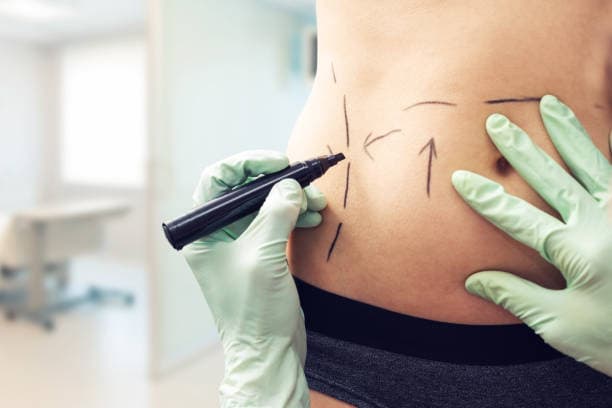
There is no universal map for VASER incisions. Their position depends on your anatomy, the area being treated and where your surgeon needs access to achieve the planned result.

Where appropriate, access points may be positioned around natural folds, creases or less conspicuous areas of the body.

Your surgeon should be able to show you where they expect to make the incisions before your procedure.


Learn More
waiting-room-flowers-table
massage-back-hands

Abdomen and flanks

For VASER of the abdomen or flanks, access points need to give the surgeon suitable access to the areas being treated.

Depending on the treatment plan, incisions may be positioned around less conspicuous areas of the abdomen or close to natural contours.

Arms

VASER treatment of the arms also requires small access points through which the treatment instruments can pass.

Their exact location varies according to the part of the arm being treated and your individual anatomy.

Thighs

Incision placement for thigh VASER depends partly on whether the inner thighs, outer thighs or another area is being treated.

Natural folds may provide discreet locations for access points where this is surgically appropriate.

Chin and neck

VASER treatment around the chin and neck requires access points close enough to the treatment area for the surgeon to work effectively.

These may be positioned in less conspicuous areas around the chin or neck, depending on your anatomy and treatment plan.

The number of incisions also varies between patients. Your surgeon can explain where yours are likely to be and how many they expect to use during your consultation.

mel-team

What do VASER scars look like during healing?

A new scar does not look the same as a mature one. Its colour, texture and visibility change as the skin heals and collagen within the scar remodels.

This process takes time, so a scar that looks noticeable during the early stages of recovery will not necessarily stay that way.

VASER scar healing at a glance

Stage What the scar may look like
First few days The access point is fresh and may appear pink or red, with some surrounding swelling or bruising
First few weeks The incision closes and bruising settles, although the scar itself may remain pink, red or slightly firm
Three to six months The scar continues to mature, with its colour and texture gradually changing
Mature scar The scar reaches its longer-term appearance, although the time this takes varies between patients

First few days

During the first few days, the incisions are still fresh. They may look pink or red, with some swelling or bruising around the treatment area. Dressings may also cover the access points during this early stage of wound healing. Follow the wound-care instructions given by your surgical team and avoid judging the eventual appearance of your scars at this point.

First few weeks

As healing progresses, the incisions begin to settle and the surrounding bruising and swelling should improve. The scars themselves can remain more noticeable. They may look pink or red and can feel slightly different from the surrounding skin while healing continues. This is still an early stage in scar maturation, so their appearance can change significantly from here.

clinic-seat-sink-trolley-monitor-plants
Duncan-Brennand

Three to six months

Over the following months, scar maturation and collagen remodelling continue. The colour of the scar may gradually become less prominent, while its texture can soften and flatten. Some people may notice temporary pigmentation changes during healing, including a scar appearing darker than the surrounding skin.

Mature scar

Eventually, the scar reaches its more settled appearance. How long this takes varies between patients, and scars can continue changing for an extended period. A mature VASER scar may become flatter, softer and less noticeable than it was during the early months of recovery. However, no surgeon can guarantee that a scar will become completely invisible. Your final result depends partly on how your individual skin heals.

What affects how noticeable a liposuction scar becomes?

Two people can undergo similar procedures and heal with quite different-looking scars.

This is because the eventual appearance of a scar is influenced by both the surgery itself and your individual healing response.

Factors that can make a difference include:

Factor Why it matters
Genetics Some people naturally form more noticeable scars than others.
Previous scarring A history of hypertrophic or keloid scars is important to discuss with your surgeon.
Skin and pigmentation Pigmentation can affect how a healing scar looks, particularly if post-inflammatory hyperpigmentation develops.
Wound tension Tension across an incision during healing can affect the way the scar develops.
Infection Problems with wound healing can influence the eventual appearance of a scar.
Sun exposure UV exposure can contribute to pigmentation changes in healing scars.
Smoking Smoking can interfere with normal wound healing and should be discussed with your surgical team.
Aftercare Following the wound-care advice provided after surgery can help support uncomplicated healing.

If you already know that you tend to develop raised, dark or particularly noticeable scars, mention this during your consultation.

Your surgeon can take your previous healing history into account when discussing the risks and likely outcome of surgery.

How should you look after VASER incisions?

Good wound care is an important part of recovery, but there is no single aftercare routine that should be followed by every VASER patient.

Your surgeon’s instructions should always take priority, as advice can vary depending on your procedure, treatment area and individual recovery.

In general, your surgical team will explain:

  • How to keep the incision sites clean
  • How long your dressings should remain in place
  • When you can shower normally
  • What signs to look out for while the wounds heal
  • When it is safe to begin using any scar-management products
  • How to protect healing scars from sun exposure

Avoid removing dressings early or applying creams, oils or scar products before your surgical team advises you to do so.

Silicone gels or sheets may form part of scar management once an incision has healed, but they should not automatically be applied to a fresh wound. Ask your surgeon whether they are appropriate for you and when you can safely begin using them.

UV exposure can also affect pigmentation in a healing scar. Your surgical team can advise you on appropriate sun protection as your incisions heal and mature.

Most importantly, if you are unsure whether something is safe during recovery, check with the team looking after you rather than relying on a general recovery timeline.

When should you contact your surgical team?

Your surgical team will explain what to expect during normal recovery and how to contact them if you have concerns.

  • Increasing redness around an incision
  • Pain that is worsening rather than improving
  • Discharge from an incision
  • An incision beginning to open
  • Fever or feeling generally unwell
  • Unexpected or increasing swelling

These symptoms do not necessarily tell you what is causing the problem. However, they are reasons to contact your clinical team so they can assess the wound and decide whether you need a post-operative review.

If something about an incision or your recovery does not seem right, it is better to contact your surgical team than to try to diagnose or treat the problem yourself.

Considering VASER liposuction at 101 Harley Street?

Your consultation is an opportunity to discuss both the results you want from VASER and the practical details of surgery, including incision placement and scarring.

Your surgeon can explain where your access points are likely to be, discuss any factors that may affect your scarring and talk you through the wound care required afterwards.

You can also learn more about liposuction treatment at 101 Harley Street

Frequently Asked Questions about VASER liposuction

Does VASER liposuction leave permanent scars?

VASER liposuction requires small incisions, so some degree of permanent scarring is possible. However, scars change as they mature and may become much less noticeable over time. Their eventual appearance depends on factors including incision placement, your skin, your natural healing response and aftercare.

How large are VASER incisions?

VASER uses small access incisions through which the treatment instruments and cannula can pass. Their exact size varies according to the procedure and technique used, so your surgeon is best placed to explain what to expect for your treatment.

How long do liposuction scars take to fade?

Liposuction scars change gradually as the wound heals and the scar matures. They may initially look pink, red or darker than the surrounding skin before becoming less noticeable. The time taken to reach a mature appearance varies, so your surgeon can advise what to expect during follow-up.

Why are my VASER scars dark?

Pigmentation can change during scar healing, and some people develop post-inflammatory hyperpigmentation that makes a healing scar appear darker than the surrounding skin. Sun exposure can also affect pigmentation. If you are concerned about the colour or appearance of a scar, contact your surgical team for advice.

Can VASER scars become keloids?

Any skin incision has the potential to heal abnormally, and some people have a greater tendency to develop raised scars such as keloids. If you have previously developed keloid or hypertrophic scars, tell your surgeon before VASER so this can be considered when assessing your individual risk.

Where are the incisions for abdominal VASER?

There is no universal incision pattern for abdominal VASER. Access points are planned according to your anatomy and the areas being treated, with placement chosen to allow effective treatment while keeping scars as discreet as possible. Your surgeon can show you the proposed locations during consultation.

Can liposuction scars be treated?

Scar-management options may be considered once an incision has healed. These can include silicone-based products and other treatments where clinically appropriate. However, the right approach and timing depend on the scar and stage of healing, so treatment should be discussed with your surgical team.

How can you find us?

Our surgery is located on Harley Street in Marylebone, London, within one of the world’s most prestigious and historic medical districts. Situated at 101 Harley Street, the clinic offers a discreet and refined setting in the heart of Central London, bringing together leading consultants, advanced facilities and personalised care.

We welcome patients from across the world, as well as patients travelling to London from across the UK and internationally for specialist medical, surgical and aesthetic treatments.

Our location benefits from excellent transport connections. Regent’s Park, Oxford Circus and Baker Street Underground stations are all within easy walking distance, while major London rail stations and international airports  including Heathrow, Gatwick and London City provide convenient access for national and international visitors.

Whether you are travelling from within London or further afield, our Harley Street clinic provides a calm, professional environment designed to deliver exceptional care in one of the capital’s most respected medical locations.

 

Opening hours
Monday
9 am–5 pm
Tuesday
9 am–5 pm
Wednesday
9 am–5 pm
Thursday
9 am–5 pm
Friday
9 am–5 pm
Saturday
9 am–5 pm
Sunday
Closed
101 Harley Street Day Surgery
101 Harley St, London W1G 6AH
Get directions
Speak to a specialist
Whatsapp