
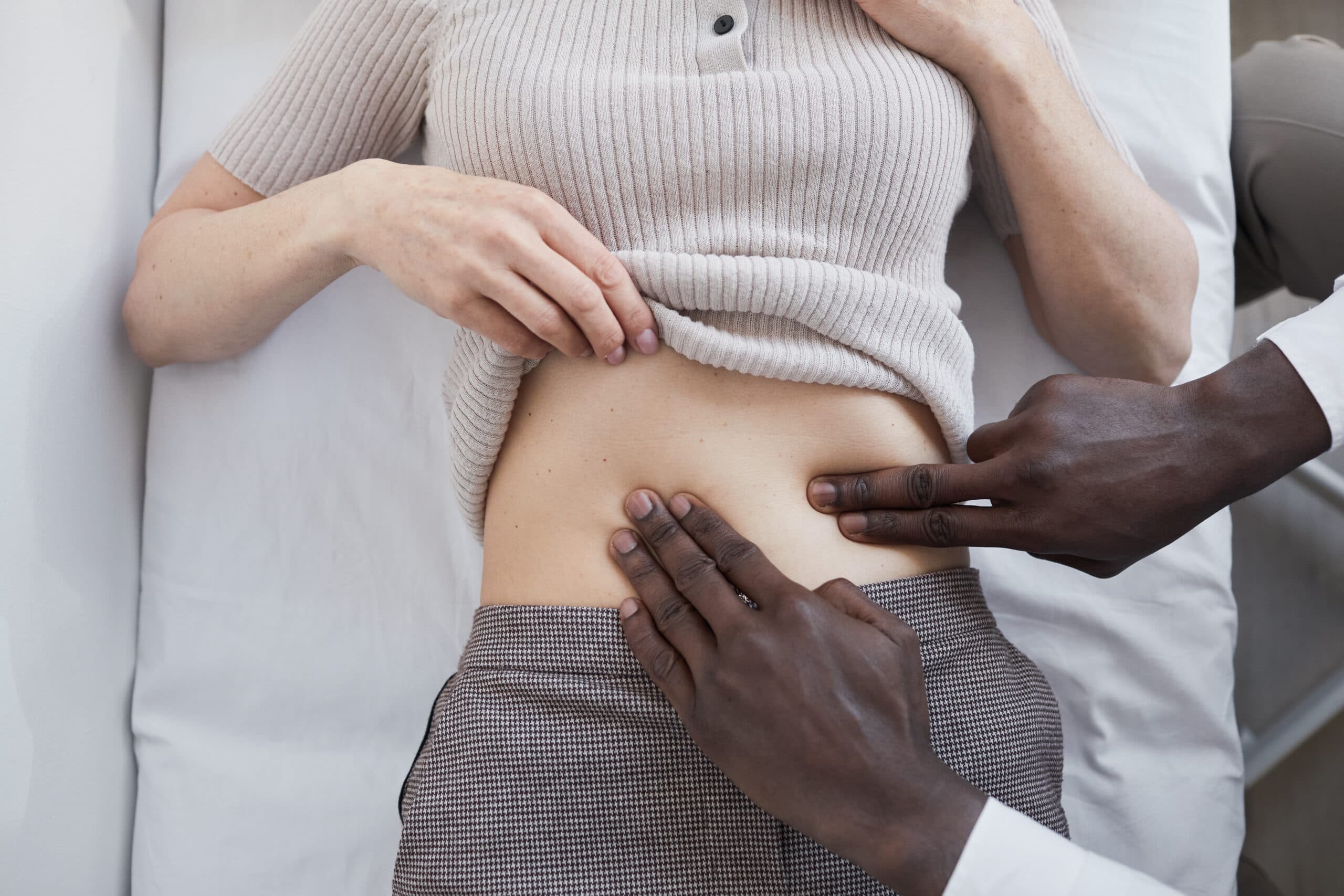




Private hernia surgery (hernia repair) in our newly renovated day-surgery centre at 101 Harley Street, Marylebone, London.
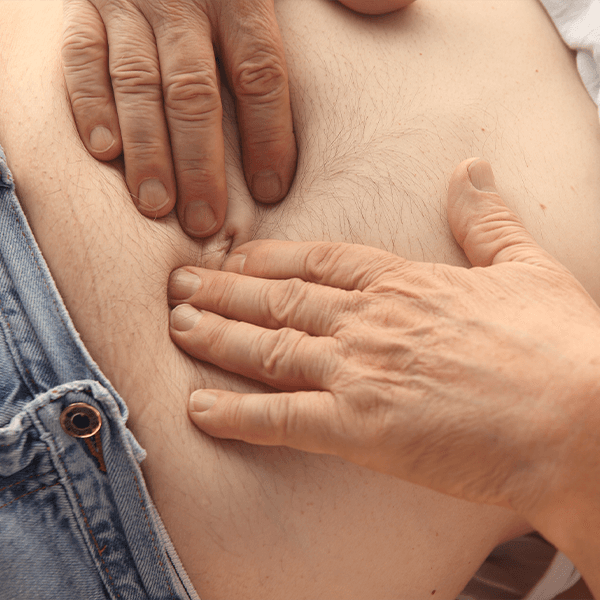
A hernia occurs when an internal structure (often intestine or fatty tissue) pushes through a weakened area of muscle, commonly presenting as a visible or palpable bulge that may feel uncomfortable with lifting, coughing or activity.
Common hernia types include:
Inguinal hernia: In the groin; the most common type (particularly in men).
Femoral hernia: Lower groin/upper thigh region; more common in women.
Umbilical hernia: Around the navel.
Incisional hernia: At the site of a previous surgical incision.
Hernias do not typically resolve on their own, and they may enlarge over time. Surgery is the definitive way to repair the weakness and return tissues to their normal position.


Hernia repair is a procedure that repositions the protruding tissue and reinforces the weakened area of the abdominal wall to restore long-term stability.
At 101 Harley Street, there are two main approaches, and your surgeon will recommend the technique best suited to your hernia type and anatomy:
A small incision is made over the hernia. The tissue is returned to position and the weakness is reinforced using sutures and/or mesh. This approach is commonly used for larger or recurrent hernias.
Several small incisions allow a camera and instruments to repair the hernia internally, often with mesh reinforcement. For selected patients, this approach can reduce post-operative discomfort and support a faster return to normal activities.

At 101 Harley Street, patient satisfaction is at the heart of everything we do. Our reviews reflect the expertise of our consultants, the quality of our care, and the exceptional results our patients experience. From your first consultation to full recovery, our team is dedicated to providing a seamless, supportive and reassuring journey, something our patients consistently highlight in their feedback. Below you can see our verified google reviews. You can also see more reviews on Doctify.
Doctor Dan Wright is not only one of the kindest and nicest human beings you could ever meet he’s one of the most professional. At every stage of my procedure I felt reassured and in very safe hands. I would not normally post a review of anything that isn’t a restaurant or a barber but I felt compelled to here because my experience was so wonderful. Fantastic stuff. Brilliant.
I recently had surgery at 101 Harley Street and was impressed by the level of care and professionalism displayed by the entire team. I was greeted with friendly staff which immediately made me feel comforted, and this genuine care continued throughout the entire journey. I highly recommend this clinic to anyone seeking quality medical care.
Dr Dan and his team at 101 are exceptional. I was made to feel so comfortable and relaxed during my procedure and everything is done with the highest level of professionalism. Can’t recommend them enough!
Staff were all extremely kind and thoughtful all through the process. I always come away feeling like I’ve had the best chat with good friends over a delicious coffee in a gorgeous spot. And all the while… also leaving with healthier skin. I’ve loved working with Emma and Duncan and everyone else at 101!
I had a procedure recently at 101 and I’m so happy with how it went! The staff and the consultant were super friendly and made me feel safe and welcome. The results of my procedure are fantastic and I will recommend to all of my friends and family.
Not every hernia requires immediate surgery. If a hernia is small and not causing significant discomfort or limiting day-to-day activities, your consultant may discuss monitoring and supportive measures.
However, hernia surgery is commonly recommended when you have symptoms, when the hernia is enlarging, or when your risk profile suggests benefit from repair. Earlier repair can reduce the chance of the hernia worsening and may simplify recovery for many patients.
Hernia repair can offer significant improvements in daily comfort and long term health, including:
| Benefits of Hernia Repair |
|---|
Relief from pain and discomfort |
Correction of visible bulging |
Improved mobility and ability to exercise |
Prevention of further hernia enlargement |
Restoration of abdominal wall strength |
Lower risk of tissue incarceration |
Enhanced confidence and quality of life |
It is common to have questions about a surgical procedure. Some key questions here that we receive from patients considering a hernia repair.
If you are looking for more general information about what happens from your first consultation to aftercare visit our Your Journey page to understand how we guide each patient through the consultation, surgery, and recovery process within our Harley Street surgical centre.
Most patients describe mild to moderate discomfort after hernia surgery, which typically improves quickly. Your team will advise on pain relief and gentle activity to support recovery.
Recovery after hernia surgery varies by technique and hernia type. Many people return to light activity within 1–2 weeks, with full recovery commonly over 6–12 weeks.
Time off work after hernia repair is often around 1–2 weeks, depending on your role and how physical it is. Your consultant will tailor guidance to you.
Yes — many hernias can be treated with laparoscopic hernia surgery. Your surgeon will advise whether keyhole repair is suitable for your specific hernia and medical history.
Open hernia repair uses a single incision over the hernia; laparoscopic repair uses several small incisions and repairs the hernia from inside the abdominal wall. Both are effective, and the best choice depends on your hernia type and circumstances.
Mesh is widely used in hernia surgery and is considered safe for most patients. It reinforces the repair and reduces recurrence risk; your consultant will explain whether mesh is appropriate for you.
Recurrence after hernia surgery is uncommon, particularly when the repair is appropriately reinforced. Your surgeon will advise on lifestyle and recovery steps to protect your result.
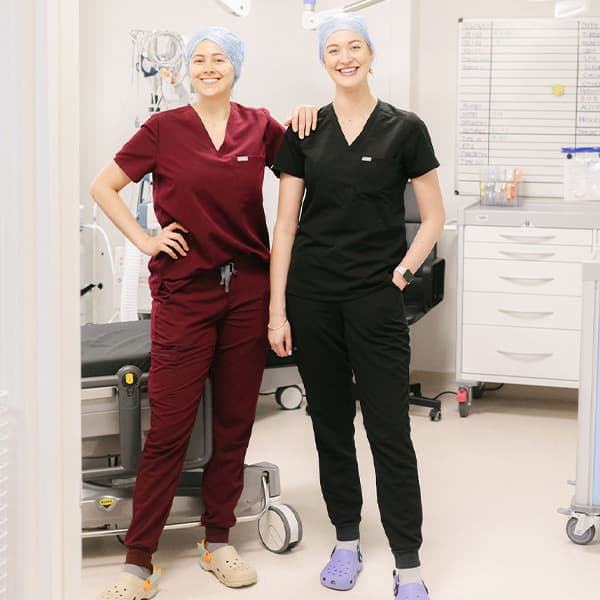
Our generously proportioned theatre can accommodate cases performed under general anaesthetic, intravenous sedation and local anaesthetic. We also have two treatment/consultation rooms where consultations and other minor operative procedures can be performed.
Our spacious, newly modernised operating theatre has been designed and equipped to provide surgeons and anaesthetists with an optimised environment to perform ambulatory day case surgical procedures. It is a very flexible space and can accommodate a wide range of non-infectious cases performed with local anaesthesia, IV sedation or full TIVA general anaesthesia (ASA Grade 1 and 2 only).
To learn more about what is involved before, during and after surgery, visit our journey page below.
If the enlargement is mainly fatty tissue, liposuction may be sufficient. Through small incisions placed discreetly at the side of the chest, a cannula is used to remove excess fat and sculpt a natural contour
Firm glandular tissue beneath the nipple often requires direct removal. A small incision is typically made around the lower edge of the areola to access and excise the gland.
Most patients benefit from a combination of liposuction and excision. This ensures both volume reduction and smooth contouring across the chest.
Fine sutures are used to close incisions, and a supportive compression garment is applied to minimise swelling and assist with shaping during early recovery.
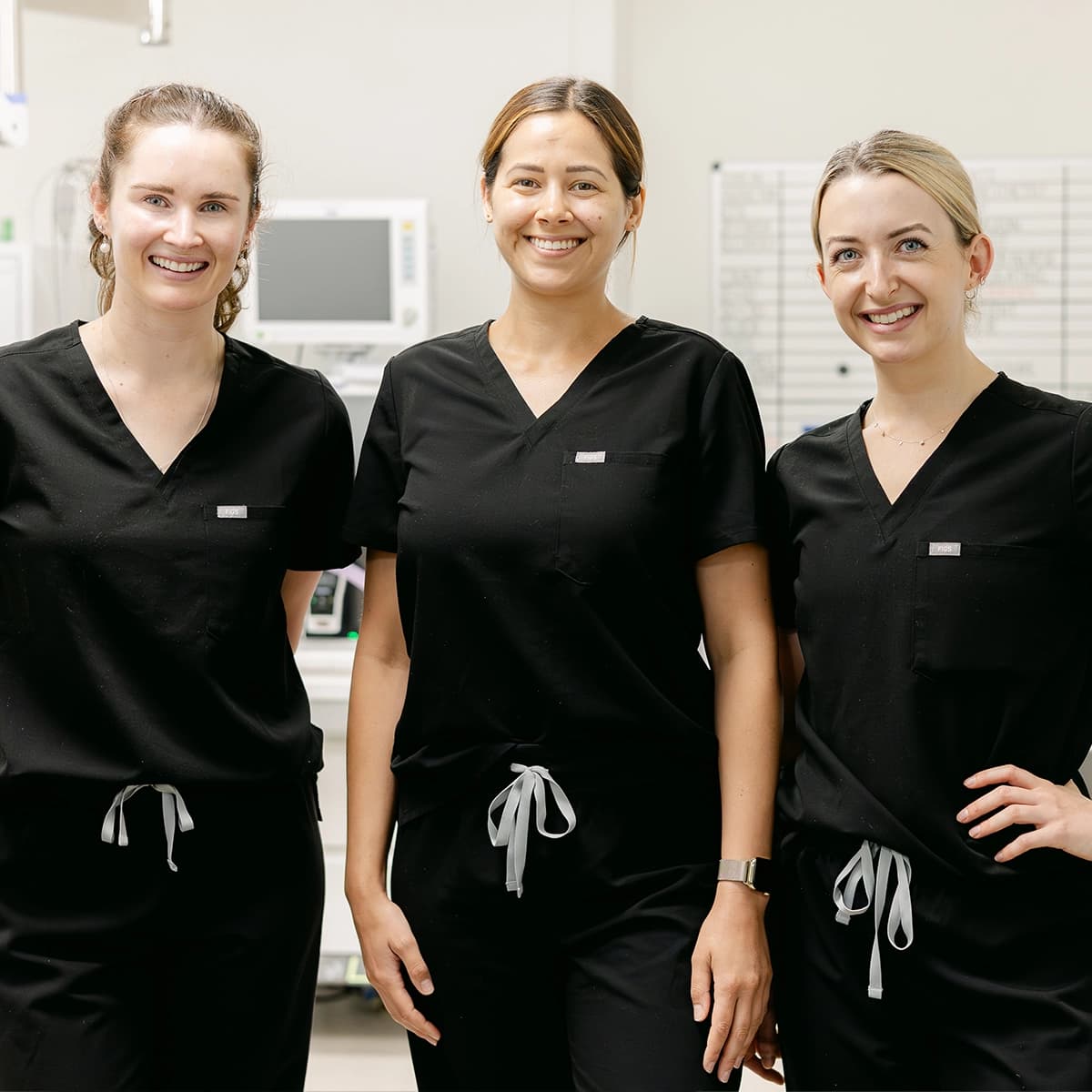
Each member of our team of friendly, welcoming and highly skilled nurses and administrative staff has been individually chosen for their compassion, enthusiasm and dedication to providing our patients and medical staff with an unparalleled level of care.