









Unsure whether fillers should be dissolved before facelift surgery? Learn when filler dissolution is recommended and how ultrasound guidance supports safety.
A safety-led guide to planning facelift surgery, a patient-focused article form 101 Harley street
Many patients considering facelift surgery have previously had dermal fillers. Fillers can play a valuable role in facial rejuvenation, but when surgery is planned, their presence needs careful assessment. This often leads to an important and understandable question: should I dissolve fillers before a facelift?
At 101 Harley Street, facelift surgery is planned with a strong emphasis on safety, accuracy and long-term results. This article explains how fillers can affect facelift surgery, when dissolution may be recommended, and how ultrasound guided dissolving supports precise, informed decision making.
Facelift surgery works by repositioning deeper facial tissues to restore natural structure and contour. Dermal fillers, by contrast, sit within or above these tissues and add volume rather than repositioning anatomy.
When fillers are present, they can sometimes obscure the true position of the underlying facial structures. This may make it more difficult to accurately assess tissue descent, skin laxity and volume distribution during surgical planning.
In some cases, retained filler can also affect how tissues move and settle during surgery. This does not mean fillers are inherently problematic, but it does mean their presence must be carefully evaluated before proceeding with a facelift.

Dissolving fillers before surgery is not always necessary. The decision depends on several factors, including the type of filler used, where it was placed and how long it has been present.
Dissolution is more commonly recommended when fillers are:
Long standing or built up over time
Placed deeply or in structural areas such as the midface or jawline
Contributing to distortion, puffiness or heaviness
Making it difficult to assess natural facial anatomy
Removing filler allows the surgeon to see and work with the true facial structure, supporting safer surgery and more predictable results.

When filler dissolution is recommended, accuracy is essential. At 101 Harley Street, this process is supported by the expertise of L’Atelier Aesthetics.
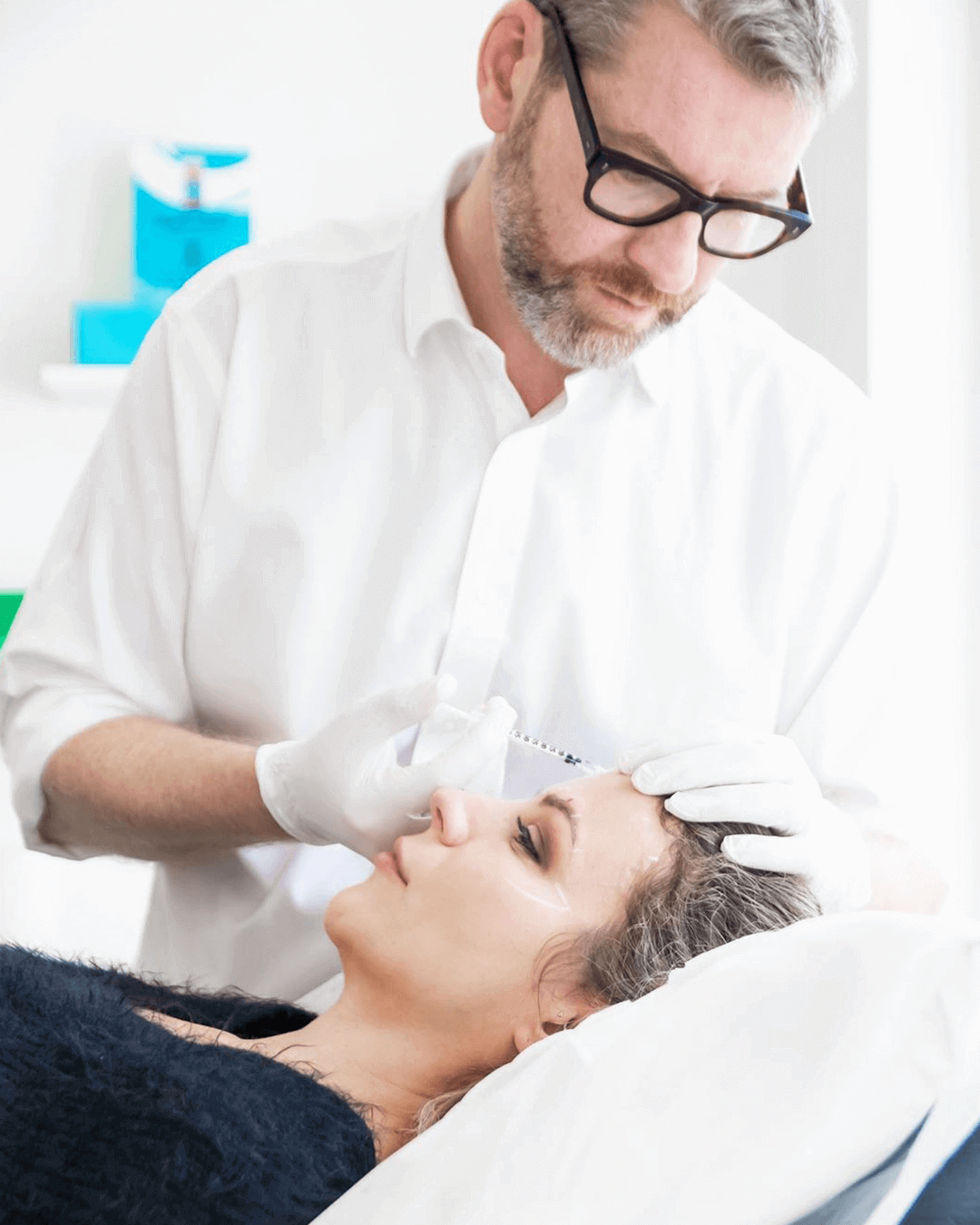
Ultrasound guided filler dissolving allows practitioners to visualise exactly where filler is located beneath the skin. This ensures that dissolving agents are placed precisely, targeting filler only where needed and avoiding unnecessary disruption to surrounding tissues.
This approach is led by Duncan, whose experience with ultrasound technology supports a high level of safety and control. For patients concerned about dissolving fillers safely, ultrasound guidance provides reassurance and clarity during the process.

If filler dissolution is required, timing is an important consideration.
In most cases, a period is allowed between dissolving fillers and proceeding with facelift surgery. This gives tissues time to settle, inflammation to resolve and the face to return to its natural baseline.
The exact timeframe varies depending on the amount of filler dissolved, individual healing response and surgical planning. Your surgeon will advise on appropriate timing to ensure the safest and most accurate conditions for surgery.

Deciding whether to dissolve fillers before a facelift is a personalised process guided by anatomy, safety and long-term outcomes. While not every patient requires filler dissolution, assessing and, where appropriate, removing filler can support clearer surgical planning and more natural results.
At 101 Harley Street, facelift surgery is approached with precision and collaboration. By combining surgical expertise with ultrasound guided filler dissolving at L’Atelier Aesthetics, patients benefit from a considered, safety focused pathway that supports confidence at every stage of treatment.
No. Not all fillers need to be dissolved before surgery. The decision depends on factors such as the type of filler used, where it is located, how long it has been present and whether it interferes with surgical assessment or tissue movement.
Fillers add volume but do not reposition underlying tissues. When present during facelift planning, they can mask true facial anatomy and make it harder to accurately assess skin laxity and tissue descent, which are key to safe surgical planning.
When performed correctly, filler dissolution is considered safe. Using ultrasound guidance improves accuracy by allowing practitioners to visualise the filler and target it precisely, reducing unnecessary disruption to surrounding tissues.
Ultrasound guided dissolving uses imaging technology to locate filler beneath the skin. This allows dissolving agents to be placed exactly where needed, improving safety and predictability compared to dissolving without visual guidance.
A settling period is usually recommended after dissolving fillers to allow inflammation to resolve and tissues to stabilise. The exact timeframe varies and will be advised by your surgical team based on individual factors.
Yes. In some cases, fillers may be used after surgery to support fine contouring or address specific areas. Any post surgical filler treatment is planned carefully to complement, not compromise, surgical results.