


Explore Sculptra vs Julaine collagen stimulators. Learn how they work, who they’re suited for, and how expert-led assessments guide treatment choice.
Surgical procedures such as facelift surgery or blepharoplasty address structural changes in the face by repositioning tissue, removing excess skin and restoring definition. While surgery is highly effective at correcting laxity and contour, long-term results are influenced by skin quality, collagen strength and ongoing tissue health.
For this reason, some patients consider collagen stimulating injectable treatments following surgery to support skin quality, maintain firmness and enhance overall longevity of results. Two treatments often discussed in this context are Julaine and Sculptra. While both are collagen stimulators, they differ in formulation, behaviour within the skin and how they are used following surgery.
This article explains how collagen stimulation fits into the post surgical journey, the differences between Julaine and Sculptra and how these treatments may be used safely and effectively after procedures such as facelifts or blepharoplasty.
Collagen is the primary structural protein within the skin. It provides firmness, elasticity and resilience. As we age, collagen production declines, leading to thinning skin, reduced support and slower healing.
Surgery restores structure by repositioning tissues, but it does not directly stimulate new collagen production. Following surgery, improving collagen quality can help:
• Support skin strength and elasticity
• Improve texture and firmness
• Enhance the longevity of surgical results
• Improve how the skin settles over repositioned structures
• Maintain a refreshed appearance as healing progresses
This is where collagen stimulating treatments may play a role, when used appropriately and at the correct stage of recovery.


Timing is essential. Collagen stimulating injectables are not performed immediately after surgery. The tissues must be fully healed and inflammation resolved before treatment is considered.
In most cases, collagen stimulation may be discussed several months after surgery, once:
• Swelling has fully settled
• Incisions have healed
• Tissue planes are stable
• Surgical results can be properly assessed
Your surgical and aesthetic teams will advise on appropriate timing based on the procedure performed and individual healing. If you want to learn more about our non-surgical treatment offerings at 101 Harley street, visit L’Atelier Aesthetics website which is also based at 101 Harley street. We specialise in non surgical treatments including injectable fillers, lasers, ultrasound using Sofwave, RF-microneedling and premium skincare treatments such as Hydrafacial.


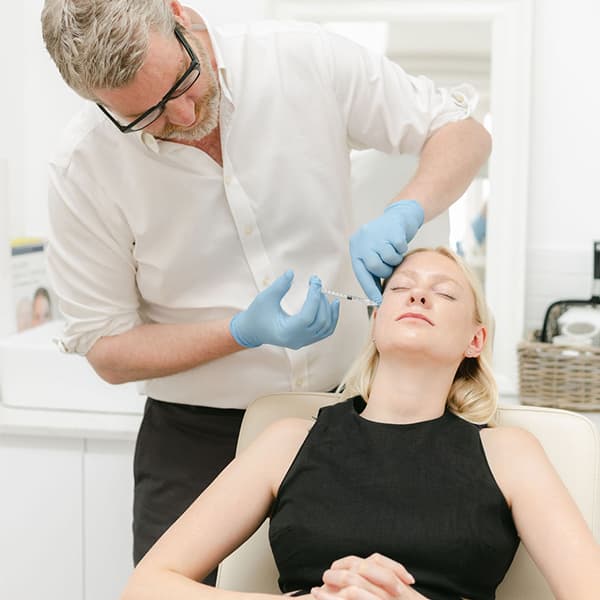
Unlike traditional dermal fillers that provide immediate volume, collagen stimulators work by encouraging the body to produce its own collagen gradually over time.
They are used to:
• Improve skin firmness
• Strengthen dermal support
• Enhance overall skin quality
• Create subtle, natural looking improvement
Julaine and Sculptra are two examples of injectable treatments used for this purpose, but they behave differently within the skin.
Sculptra is a well established collagen stimulating injectable that has been used in aesthetic medicine for over two decades. It works by stimulating collagen production gradually, with results developing over several months.
Sculptra is injected into deeper layers of the skin where it triggers a controlled collagen response. The improvement is subtle and progressive, making it suitable for patients seeking long-term skin strengthening rather than immediate change.
Following surgery, Sculptra may be considered to:
• Improve overall skin thickness
• Support areas of volume loss that surgery does not directly address
• Enhance firmness across the face
• Maintain results as ageing continues
Sculptra is not used to replace surgical lifting, but rather to support skin quality once structure has been restored.
Julaine is a newer collagen stimulating injectable designed to support natural regeneration using lactic acid based microspheres. It has been developed with a focus on refined collagen stimulation and tissue integration. Julaine stimulates collagen production while integrating smoothly within the skin. It is often described as offering a softer and more refined approach to collagen stimulation.
Julaine may be suitable for post surgical patients who:
• Want to improve skin quality without adding noticeable volume
• Prefer a newer generation collagen stimulator
• Are focusing on subtle refinement rather than structural change
• Want to support long-term tissue health
Julaine is often discussed in the context of maintaining results rather than rebuilding lost volume.
At 101 Harley Street, collagen stimulation is approached from a skin-first, assessment-led perspective. Treatment planning focuses on:
Skin quality and integrity
Early signs of collagen decline
Facial balance and natural expression
Long-term skin health rather than short-term correction
This approach ensures that injectable treatments support the skin’s natural structure without unnecessary volume or over-correction.
Both Sculptra and Julaine are collagen-stimulating injectable treatments, but they differ in focus. Sculptra primarily targets deeper structural support and volume loss, while Julaine is designed to improve skin quality, strength and regeneration without altering facial shape. This makes Julaine particularly suitable for patients seeking subtle, skin-focused rejuvenation.
No. Julaine is not a volumising filler. Its purpose is to stimulate collagen within the skin, improving firmness, texture and elasticity over time. Because it does not add volume, it is often chosen by patients who want natural enhancement without changes to facial contours.
Collagen stimulation is a gradual process. With skin-focused treatments such as Julaine, early improvements in skin quality may be noticed within weeks, with continued enhancement over several months as collagen production increases. Results develop subtly and progressively rather than appearing overnight.
Julaine is well suited to patients experiencing early to moderate signs of skin ageing, including loss of firmness, thinning skin or reduced elasticity. It is also a popular choice for patients interested in preventative treatments and long-term skin health rather than volume restoration.
Yes. Collagen-stimulating treatments are often part of a wider treatment plan. Skin-focused biostimulators like Julaine can be combined with other non-surgical treatments to enhance overall skin quality, depending on individual needs and clinical assessment.
While both treatments stimulate collagen, they are not interchangeable.
The choice depends on surgical outcome, skin condition and long-term goals rather than preference alone.
Your practitioner will assess whether collagen stimulation is appropriate and which option aligns best with your needs.
It is important to understand that collagen stimulators do not lift sagging tissue or replace surgical correction. Instead, they support skin quality once structure has been restored.
Used correctly, collagen stimulation can complement surgery by improving how the skin ages after the procedure, but it should never be seen as a replacement for surgical intervention when laxity or structural descent is present.
At 101 Harley Street, surgical care and aesthetic medicine work together. Post-surgical collagen stimulation is typically delivered in collaboration with L’Atelier Aesthetics, where treatment planning considers:
• The type of surgery performed
• Healing progress
• Skin quality and thickness
• Long-term ageing patterns
• Patient goals and expectations
This collaborative approach ensures safety, natural outcomes and continuity of care. If you have more questions about surgery at 101 Harley Street or want to know what is involved on the day, click below to learn more and start your journey with us.