




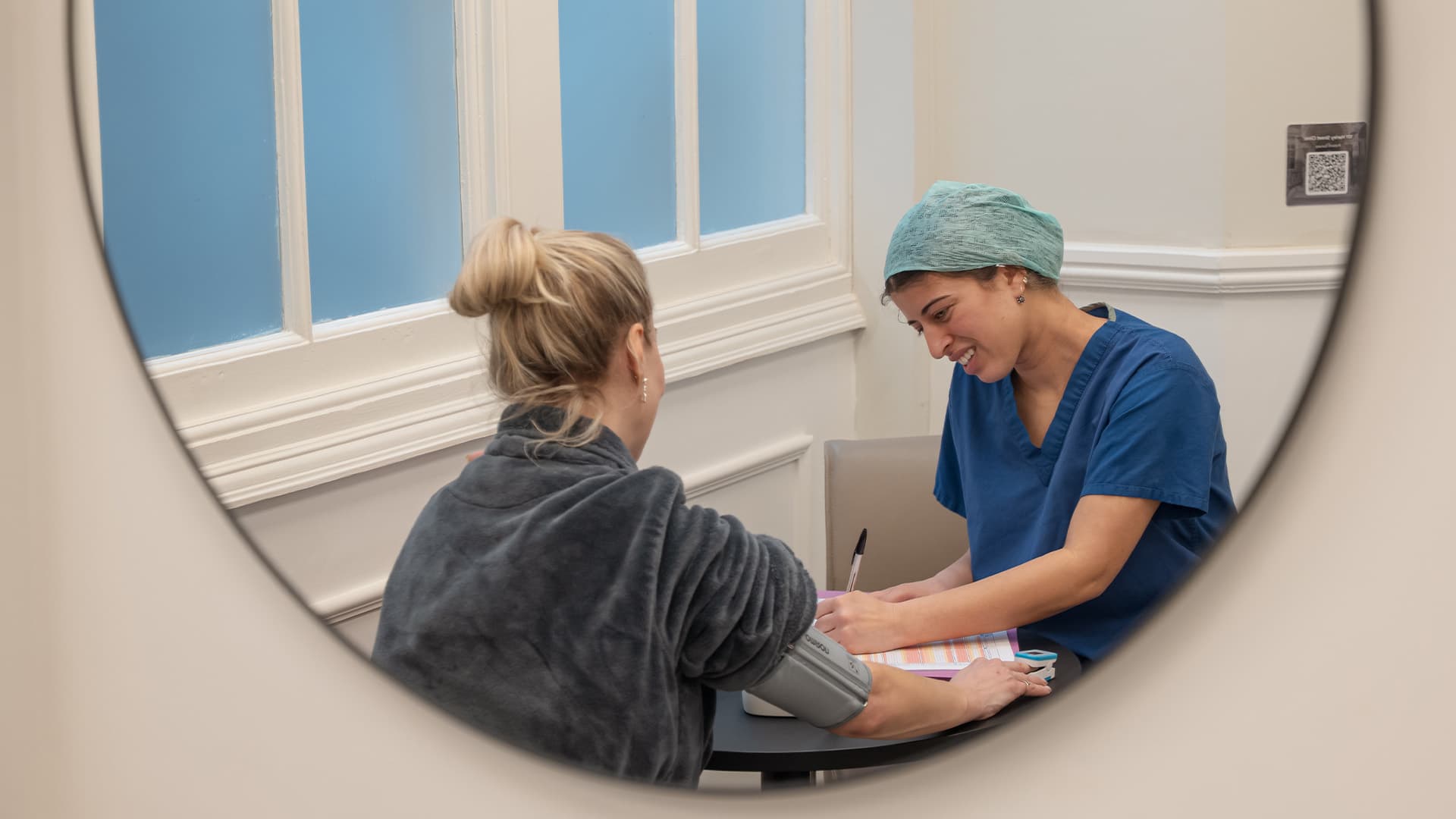
At our boutique day-surgery unit located in the heart of London’s renowned medical district, we combine world-class clinical excellence with a warm, welcoming environment. Our facility is purpose-designed for comfort and safety.
Find out the steps involved for your day surgery, use our links to navigate through the various stages. If you have any questions you can contact us by Phone, Email and via WhatsApp.


During the first consultation, the decision is made that surgery is needed and appropriate. The patient is referred for pre-op assessment.
Patient’s fitness for surgery is assessed. 101 Booking’s team will contact the patient and liaise with the medical secretary/surgeon to evaluate if any further assessments and/or tests are required before scheduling a suitable date for surgery.
Patient is admitted for surgery into the pre-operative room. The pre-operative checks are complete, and the patient is prepared for surgery. Patient will meet with surgeon and anaesthetist for last minute checks and questions.
It’s time for your procedure!
Patient is recovered from surgery. When the patient meets discharge criteria, they will be discharged with their NOK. The nursing team will provide medication education and advice on discharge. The Surgeon or Medical Secretary will contact the patient to arrange a post-operative consultation.


Prior to your surgery here at 101 Harley Street Day Surgery, it is imperative that you have a face-to-face or video consultation with your operating surgeon, at least two weeks prior to this date. Following this, our Clinical, Bookings and your Surgical team will work away in the background to ensure that all the relevant health checks and tests have been completed prior to your surgery date.


Our Bookings Team will send you an email following the scheduling of your surgery date, this will contain links to our pre-operative and psychological screening questionnaire, please follow the links and complete these forms. These forms help our clinical team understand more about your medical history, medication history, motivations for surgery and any other information that will help us take care of you during your stay. Please complete these forms as soon as possible as we may require additional testing to be complete prior to your surgery date, failure to do so may delay your surgery date. If you are having issues completing them online, you may request them in paper form by post or in person.
Your surgeon, anaesthetist and our nursing team will review your pre-assessment documents, based on our pre-assessment criteria. You may receive a telephone call to clarify points or to arrange a visit to 101 Harley Street for blood tests, an ECG, or psychological assessment. This is for your safety and to ensure your suitability for surgery.
Methicillin-resistant Staphylococcus aureus (MRSA) is an antibiotic-resistant bacterium, which lives harmlessly on the skin of around 1 in 30 people. MRSA is more prevalent in hospital settings, which can contaminate a wound, burn, IV drip or catheter and possibly delay healing.
Healthy people, including children and pregnant women are usually at risk of MRSA infections. As a day case hospital, 101 Harley Street has an extremely low rate of post- surgical infection and screens for high-risk patients in our medical questionnaire.
If you fall into this category, you will be offered a simple decontamination regime, which involves a daily antibacterial scrub to be used 3-5 days before surgery.
Strict adherence to fasting instructions is crucial to keep you safe during surgery. You will be required to fast from food 6 hours prior to the start of your surgery. You can drink clear fluids (water, black coffee, and clear apple juice) up to until 2 hours prior to your surgery time. If you have diabetes or have concerns about fasting, please contact your consultant or the 101 nursing team who can advise you on how to proceed.
The day before your procedure one of our friendly team members will contact you to complete the pre-operative phone call. This will ensure we confirm any last-minute details, will help to eliminate any confusion around pre-operative instructions and will provide you an opportunity to ask any last-minute questions to ensure you are well prepared for surgery.
These fasting instructions MUST be followed for all general anaesthetic & sedation procedures.
There is an increased risk of blood clots, usually in your legs, if you are flying before or after surgery.
This type of blood clot also known as a Deep Vein Thrombosis (DVT); you may be at an increased risk of developing a DVT if you:
The risk of developing a travel related DVT in day case surgery is low, even if you’re classed as moderate to high risk. However, to minimise this risk, we recommend that you: Do not fly for 2 weeks before surgery and do not fly for 4 weeks following surgery.
Smoking before and after surgery increases the risks of anaesthesia and significantly constricts blood vessels to tissues, thereby reducing healing and producing poor scars. Smokers will be advised by their consultant to stop smoking at least 2 weeks before their procedure. If your consultant or anaesthetist needs to postpone your surgery because you are still smoking, you would be subject to rescheduling fees as per the Terms and Conditions you have received.
You do not need to fast before your procedure, so have a light meal up to two hours before your admission time and continue to drink fluids.

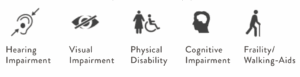
Extra Assistance: If you require extra assistance on the day or have any communication needs, please let us know so we can discuss with you how to best meet your requirements. Our day surgery is wheelchair accessible, and our staff are available to provide support when needed.

| Do Not | Do |
|---|---|
✘ DO NOT drink any alcohol 24hrs prior to or post-surgery | ✓ DO advise your nurse if you think there is any chance you may be pregnant |
✘ DO NOT smoke or take recreational drugs. This should stop a minimum of 2 weeks before surgery | ✓ DO shower either the evening before or the morning of your operation |
✘ DO NOT apply anything topically to your skin including deodorant | ✓ DO tie your hair up if it is long |
✘ DO NOT apply any moisturiser to your skin for a period of 24hrs prior to your operation | ✓ DO wear loose fitting clothing so you can change easily |
✘ DO NOT shave your operative site, this increases the risk of infection | ✓ DO refrain from applying fake tan for a period of 7 days prior to your operation date |
By Car
101 Harley Street does not have onsite car park. However, there are two 24hr car parks located very close to Harley Street. Q-Park is open 24 hours and is located on Queen Anne Mews, W1G 9HF (7-minute walk from 101). There is another larger car park located in Cavendish Square, W1G OPN, open 24 hours (8-minute walk from 101). Short term parking can be found on the surrounding streets. Please be aware 101 Harley Street is within the Congestion Charging zone, which can be paid online or by phone.
By Train
By Bus
Underground


Relatives and friends will not normally be allowed to remain with you during your stay, once your nurse has met you for your admission. All patients may request a chaperone at any point of the journey. In many instances, a chaperone is mandatory. While your Next of Kin (NOK) has their procedure you are welcome to wait in our waiting room, alternatively why not explore everything Marylebone has to offer, including;


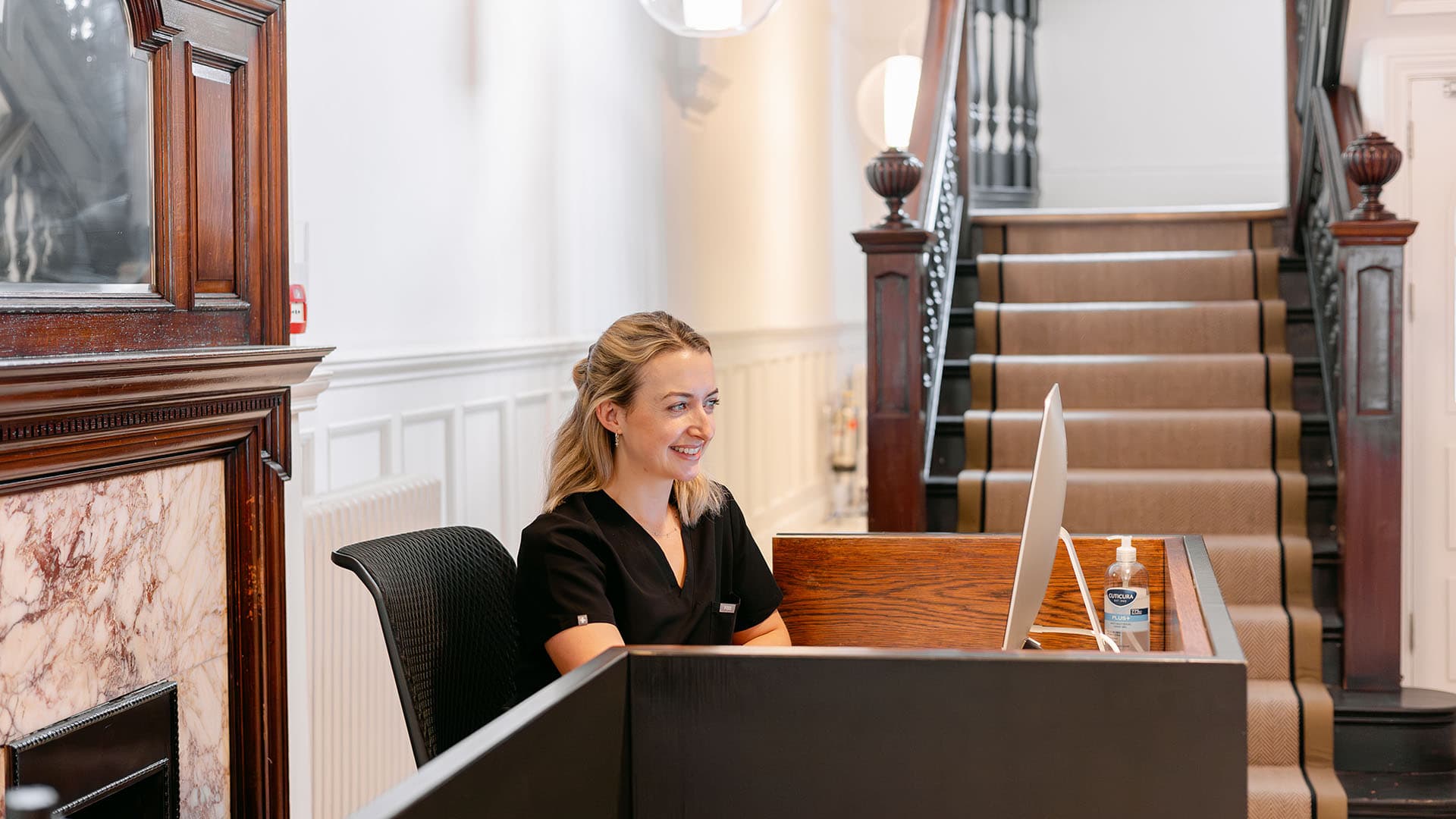
On your arrival you will be greeted by our friendly receptionist, who will take your details and guide you into our state of the art waiting room. Your nurse will then collect you from the waiting room and guide you to our pre-operative room. Space in the pre-operative room is limited, so only one relative/friend will be able to accompany you.
If you have any questions about what is being discussed, please raise this with a member of your surgical team. Please let us know prior to your surgery date if you have any additional communication needs, that can make this process easier for you.
Your Nurse will confirm your details and run through the preoperative checklist.
On your arrival you will be greeted by our friendly receptionist, who will take your details and guide you into our state of the art waiting room. Your nurse will then collect you from the waiting room and guide you to our pre-operative room. Space in the pre-operative room is limited, so only one relative/friend will be able to accompany you.
| Your Nurse will then confirm your details and run through the preoperative checklist. |
|---|
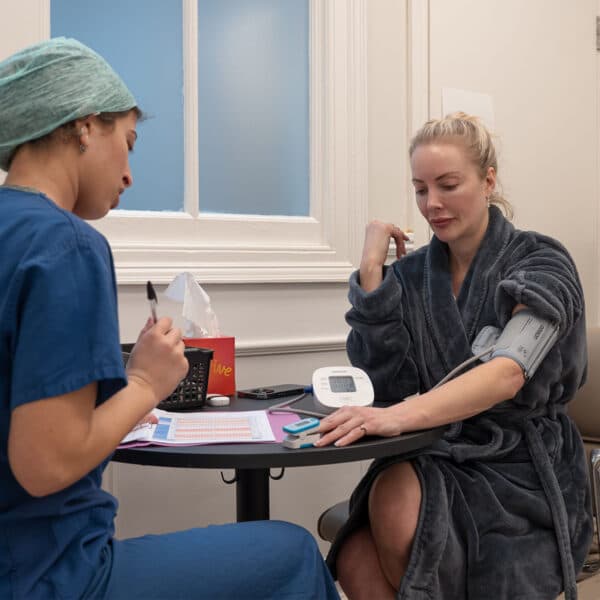
They will take your vital signs (BP, HR, TEMP, RR |
You will then be changed into a hospital gown. |
ou will then meet with your surgeon again, they will confirm your personal and operational details. They will also mark the site of your operation with a marker pen if applicable. This is the opportunity to ask any more questions. You will sign the procedure consent form at this stage. |

When you wake up from your surgery, you will be in the recovery room with your nurse. They will closely monitor you, along with your anaesthetist, post-surgery and regularly check your vital signs. When you are ready, and your nurse deems it safe to do so you will be transitioned back into the post-operative room in preparation to go home
101 Harley Street Day Surgery follows strict discharge criteria that you must meet before you are discharged home. You will be ready for discharge once you have met these criteria, this will usually be 2-4 hours following your procedure. Everyone recovers from a general anaesthetic at different rates so you will be under the care of your anaesthetist and nurse until they deem it appropriate for you to go home. Your admitting nurse will estimate timing so that your escort can plan your transport home. It is vital, for your own safety, that you have a responsible adult to take you home and spend your first night with you, unless previously agreed.
Your nurse will discharge you into the care of your Next of Kin. They must accompany you home by car or taxi – public transport is not suitable. You will only be discharged when you are ready to walk out.


It is recommended that you rest at home for 24-48hrs. It is important not to return to work during your recovery period (this timeframe will be specified by your surgeon). We advise someone stay with you for the first 24hrs after surgery. Follow the advice of your Surgeon on discharge, in addition to this we recommend:
Common side effects include; Headaches, dizziness, nausea and/or vomiting, sore throat and dry mouth, tiredness, aches and pains.
Possible complications & what to do:
Bleeding: slight oozing is normal post-operatively, however if you are concerned, please contact the number you have been provided by your Surgeon’s medical secretary, alternatively please contact our Nurses on 07472319756. In the unlikely event that there is a large amount of blood loss or if you become dizzy and/or disorientated, please call an Ambulance on 999.
Uncontrollable pain: If you have been taking your prescribed pain killers as per your surgeon’s instructions and your pain is still unmanageable, please contact the number you have been provided by your Surgeon’s medical secretary, alternatively please contact our Nurses on 07472319756.
Nausea & Vomiting: If your nausea or vomiting does not ease after 24 hours post-surgery, please contact the number you have been provided by your Surgeon’s medical secretary, alternatively please contact our Nurses on 07472319756.
The day following your surgery, you will be called by a member of our nursing team who will check to see how you are feeling after your first night, confirm any post-operative instructions that you may have missed and answer any further questions.
| Do Not | Advice for Carers (responsible adult) |
|---|---|
✘ DO NOT drive any vehicle, including riding a bicycle. | Escort the patient home by car or taxi (not public transport) |
✘ DO NOT operate machinery | Stay with them for the 24 hours following surgery |
✘ DO NOT drink alcohol | Help with household activities, such as cooking and cleaning |
✘ DO NOT smoke | Offer the patient plenty of fluids to drink (no alcohol) |
✘ DO NOT take any medication or drugs not prescribed and approved by your GP or Surgeon | Assist with washing and getting dressed |
✘ DO NOT take sleeping tablets | Ensure they take regular painkillers or medication as prescribed/advised |
✘ DO NOT make any important decisions or sign any contracts/legal papers. | Ensure that you and the patient are aware of the common complications of the procedure, such as bleeding, |